
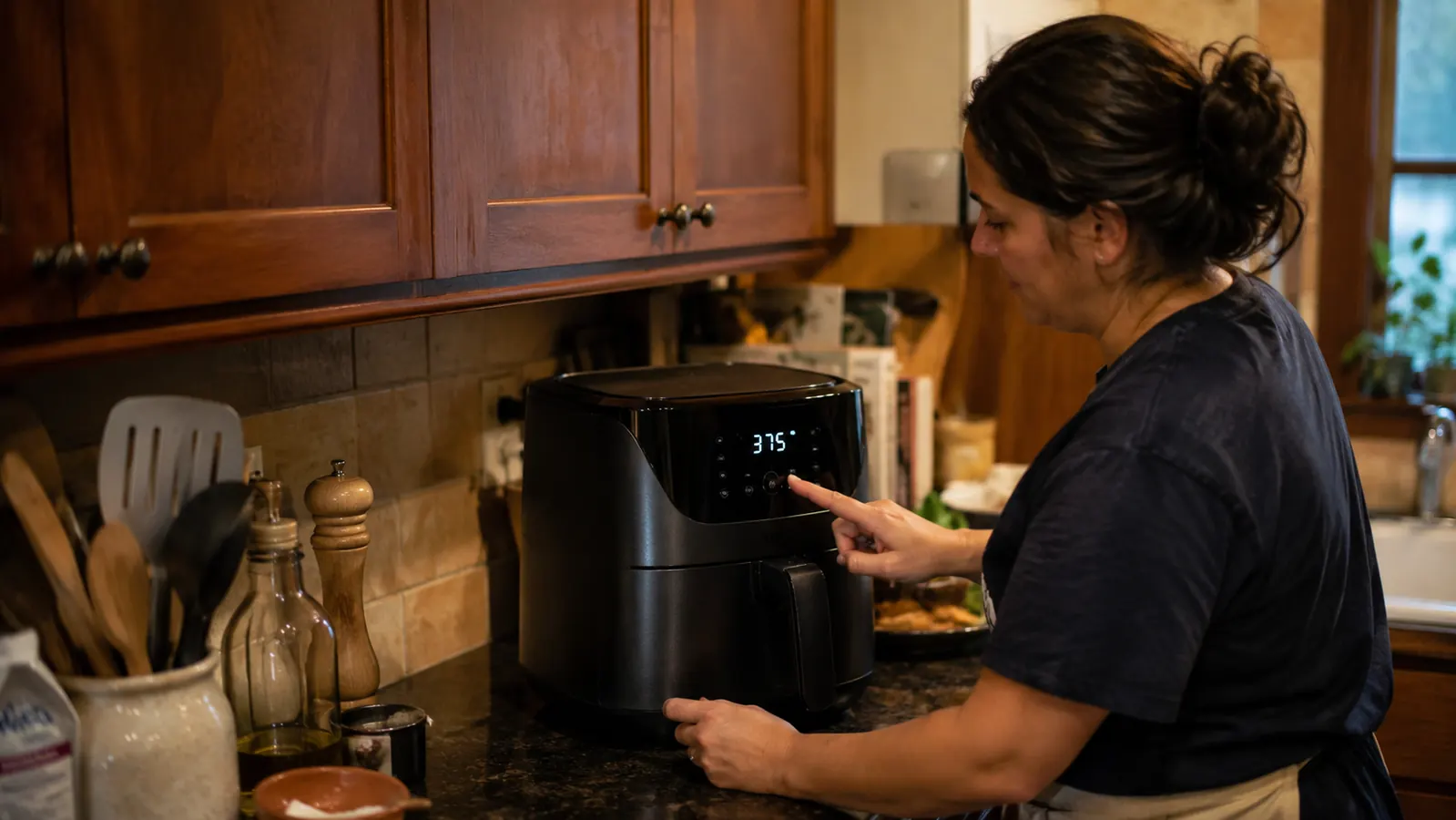
My kitchen has a drawer under the stove that used to be where good intentions went to die. A waffle iron I used twice. A rice cooker still in its box. So when I tell you I was skeptical about buying another countertop appliance, understand that skepticism was earned honestly. I bought the Chefman Multifunctional Digital Air Fryer back in March, mostly because my old basket-style fryer had developed a wobbly handle and I was tired of babysitting it through every single batch of fries.
Four months later it lives on my counter, not in that drawer, and it gets used four to five nights a week. That's the whole review in one sentence, but I know that's not enough to make a real decision on, so here's everything that happened between unboxing the Chefman and it earning permanent counter space in a kitchen that doesn't have room for appliances that don't pull their weight.
For context, my kitchen isn't a magazine spread. It's a galley-style setup with about 24 inches of usable counter next to the stove, a coffee maker that never moves, and three kids who all want dinner at slightly different times because of practice schedules. Anything I buy has to earn its footprint fast, and it has to survive being used by someone other than me on nights I'm running late.
The Quick Verdict
A genuinely useful weeknight workhorse that handles chicken, vegetables, and reheats without drama, though the touchscreen and the rotisserie attachment take some getting used to.
Amazon Check Today's Price →Still boxing your dinner routine in with a stovetop you have to babysit?
See today's price and current availability for the Chefman Multifunctional Digital Air Fryer on Amazon before you decide.
Amazon Check Today's Price on Amazon →How I've Used It
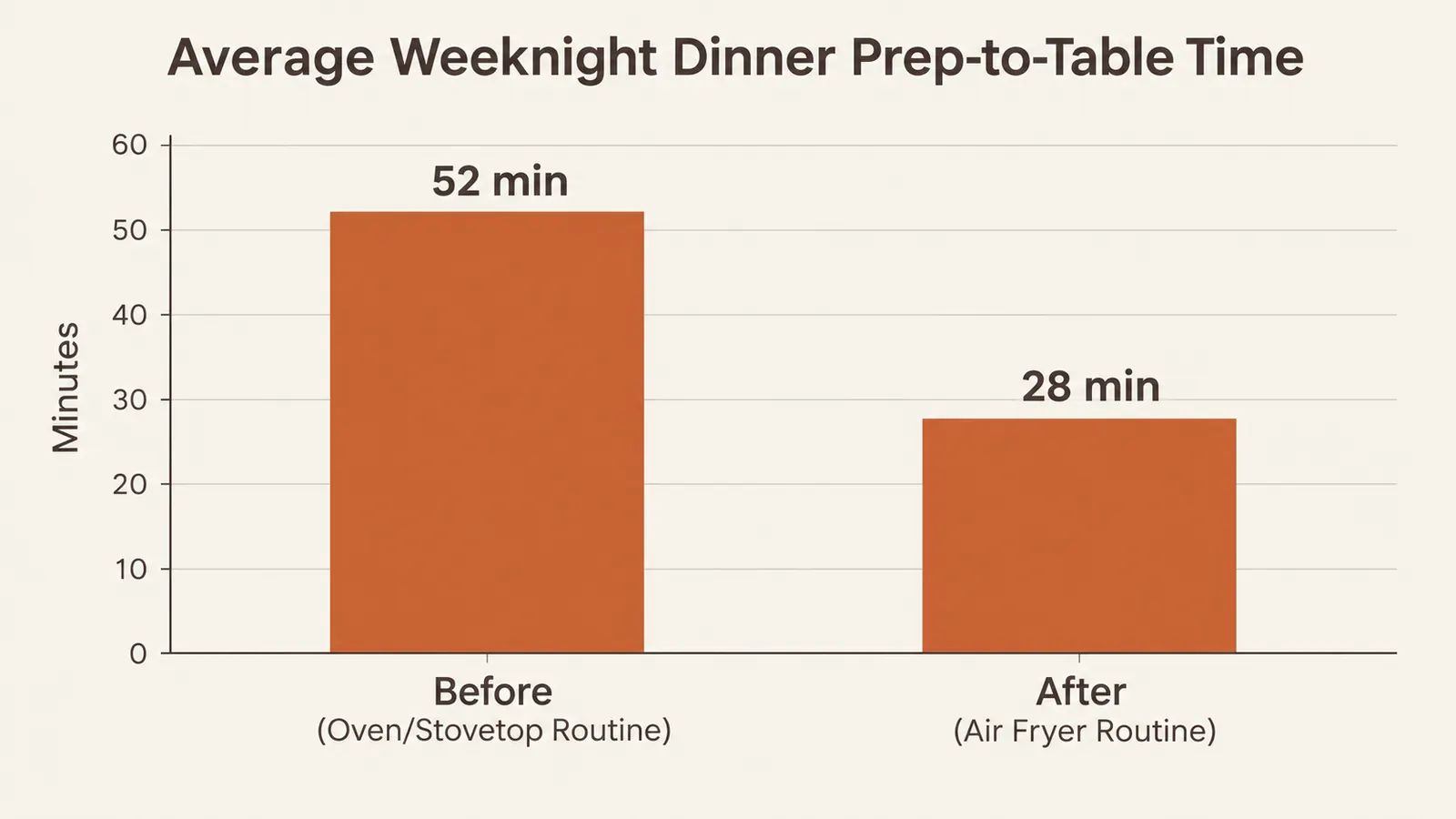
I'm not a food blogger doing one recipe for a photo shoot. I'm a person who cooks dinner for a family of four on a weeknight schedule that starts unraveling around 5:30. My testing wasn't a lab, it was my actual kitchen: the same 24 by 30 inch counter run, the same overhead light that makes everything look slightly yellow by 6 PM, the same rushed 20 minutes between picking up kids from practice and getting food on the table before homework starts.
Over four months I ran the Chefman through chicken thighs, frozen fries, roasted broccoli, reheated pizza, a whole small chicken on the rotisserie spit, and more bags of frozen tater tots than I want to admit to. I didn't follow a testing script or a recipe card. I used it the way I'd actually use any appliance that has to prove itself against my patience on a random Tuesday, which is a much harder test than a controlled kitchen demo.
The 17 touch-screen presets sound like marketing fluff until you're standing there at 5:45 with raw chicken in one hand and a toddler asking for a snack in the other. Tapping "chicken" instead of scrolling through a dial to guess at temperature and time is a small thing, but across dozens of dinners it adds up to real minutes saved, and on a bad night, minutes matter more than they should.
By week three I had a rotation going: Mondays were chicken thighs with whatever vegetable needed using up, Wednesdays were fries with whatever protein was already cooked from the weekend, and Fridays became rotisserie night almost by accident. That rotation is the real test of an appliance like this. Anyone can make one good batch of fries. The question is whether you'll still reach for it in month four, and I do, most nights without thinking about it.
The Touchscreen and the Learning Curve
The first week was rockier than I expected. The Chefman's touch controls are responsive, but they're also sensitive in a way that took some adjusting to. I'd bump the display with a stray oven mitt and accidentally add ten minutes to a cook, which meant checking on dinner to find it further along than I planned. Once I learned to keep my sleeves and mitts clear of the panel, that stopped being an issue, but it's worth knowing going in that this isn't a knob you can operate half paying attention while you're also stirring a pot on the stove.
What won me over was the rotisserie function, which I didn't expect to use much and now use almost every Sunday. A whole chicken, seasoned simply with salt, pepper, and a little paprika, comes out with skin that actually crisps instead of steaming itself soggy the way it sometimes did in my regular oven. Loading the bird onto the spit took two tries to get comfortable with, the forks need to bite in evenly or the chicken spins lopsided, but once I had the technique down it became one of the easiest parts of my weekend routine.
The dehydrate setting also surprised me more than I expected it to. I've made kale chips and dried apple slices for school lunches, and both held up better than the store-bought versions that used to go stale in the pantry within days. It's not a feature I bought the Chefman for, but it's become a quiet reason I keep it plugged in instead of tucked away.
Noise is the other thing nobody mentions until you own one. The Chefman runs with a steady fan hum, closer to a box fan on low than anything jarring, and it hasn't woken a sleeping kid or talked over a phone call from across the room. Compared to my old fryer, which rattled audibly once the basket had food in it, this is quieter, though it's not silent, and if you're someone sensitive to appliance noise in an open-concept kitchen it's worth knowing it does have a presence.
Capacity: Bigger Than I Expected, Still Not Infinite
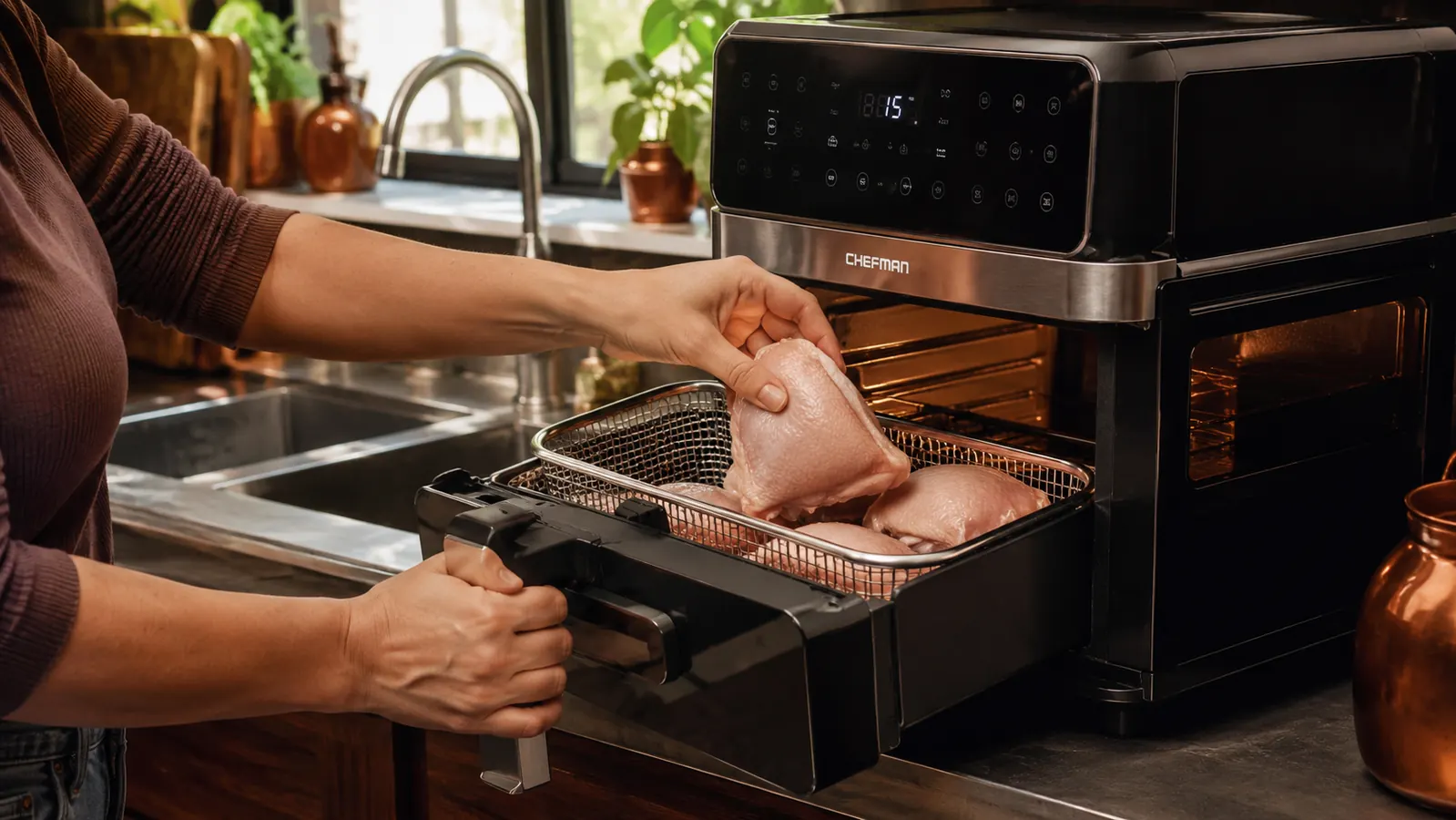
This is where a lot of air fryer reviews get vague, so let me be specific. I can fit about a pound and a half of chicken thighs in a single layer without overlapping, or roughly four cups of chopped vegetables. That's enough for my family of four on most nights, but if I'm cooking for a larger group, my sister's family visiting or a birthday gathering, I still run two batches back to back. The Chefman's basket is genuinely bigger than my old fryer's, and that difference matters when you're trying to get everyone fed before homework time starts eating into the evening.
The tradeoff is footprint. This unit takes up more counter space than a basket-style fryer, and it's heavier to lift if you're someone who stores appliances between uses in a cabinet. I don't store mine. It stays out permanently, next to the coffee maker, because moving something this size in and out of storage every single day just isn't realistic for how I actually cook on a weeknight.
I've also learned the hard way that overcrowding the basket, even by a little, is the fastest way to end up with soggy, unevenly cooked food. The first time I tried to squeeze in enough fries for four people in one go, half of them came out limp because air couldn't circulate properly. Respecting the fill line on the Chefman's basket, even when it feels like it's slowing you down, is the difference between a good batch and a mediocre one.
Preheating is another habit I had to build. The Chefman doesn't force a preheat cycle the way some ovens do, so early on I'd load food straight into a cold basket and end up with results that were fine but not great, a little pale, a little softer than I wanted. Giving it the same three minutes I'd give a skillet before adding food made a noticeable difference in how evenly things browned, especially with chicken thighs and frozen fries. It's a small extra step, but skipping it is the fastest way to end up disappointed and blame the fryer for something that was really a shortcut on my part.
Cleanup, Honestly
Cleanup is the thing that determines whether an appliance gets used regularly or becomes drawer furniture. The basket and tray are dishwasher safe, which matters more to me than almost any other spec listed on the box. On nights I hand-wash it instead, the nonstick coating has released food easily so far, four months in, with no sticking or peeling that I've noticed anywhere on the surface.
The rotisserie spit and forks need a little more scrubbing because grease collects in the fork grooves, but a few minutes with a bottle brush handles it without much fuss. The one real annoyance is the crumb tray at the bottom, which I forgot existed for about three weeks before I noticed it needed emptying. Once that became part of my routine, it stopped being a problem, but it's the kind of maintenance step that isn't obvious from the manual alone and worth mentioning to anyone new to a unit like this.
Who Else I Considered
Before landing on the Chefman, I looked at two other options in a similar price range. One had better name recognition but a noticeably smaller basket that would have meant more batches for a household our size, which defeats the purpose of buying something to save time on a weeknight. The other had a simpler dial interface, which appealed to me after my touchscreen learning curve, but it lacked the rotisserie and dehydrate functions that ended up becoming a real part of my weekly routine rather than a nice-to-have I never touched.
In the end, the combination of basket size, preset count, and the rotisserie tipped it in favor of the Chefman for me, even with the adjustment period on the touch controls. I'd rather spend a week learning a sensitive screen than spend every week wishing my basket were bigger.
I also asked around before buying, texting two friends who already owned air fryers to see what they'd change about theirs. Both mentioned wishing for a bigger basket, which confirmed capacity was the right thing to prioritize over a slightly smaller unit with more brand recognition. That kind of unglamorous, practical feedback mattered more to my decision than any spec sheet did, and four months in, I still think it was the right call for a kitchen that feeds four people most nights.
I didn't buy this to replace my oven. I bought it to stop dreading the 20 minutes before dinner, and that's the only test that actually mattered to me.
What I Liked
- Basket fits enough for a family of four in one batch most nights
- Rotisserie produces genuinely crisp skin, better than my regular oven
- Dishwasher-safe basket and tray make weeknight cleanup realistic
- 17 presets cut down on guessing at time and temperature under pressure
- Dehydrate function works well for simple snacks, not a gimmick
Where It Falls Short
- Touchscreen is sensitive and easy to bump accidentally in the first week
- Larger footprint than a basket-style fryer, not ideal for small counters
- Crumb tray maintenance isn't obvious until you build the habit
- Cooking for more than four people usually means a second batch
Who This Is For
If your weeknights look anything like mine, a scramble between 5 and 6:30 with more moving parts than hands to manage them, the Chefman earns its space. It's built for people who want to press a preset and walk away, not people who want to fine-tune every degree of a cook. If you regularly cook for four or fewer and you're replacing a smaller or older air fryer, this is a solid step up in both capacity and features, and the rotisserie alone makes it worth a look for anyone who misses roast chicken but doesn't want to run a full oven for one bird.
Who Should Skip It
If your kitchen counter space is already tight, or you're regularly cooking for six or more people at once, this might frustrate you more than it helps. Large families who need to feed a crowd in one pass may find themselves running multiple batches often enough that the time savings shrink to almost nothing. And if you already have a full-size convection oven you're happy with, this won't replace it. It supplements it for the smaller, faster jobs, which is exactly the role it's played in my kitchen.

If 6 PM keeps turning into a scramble, this is the fix I actually kept using
Check today's price on the Chefman Multifunctional Digital Air Fryer and see if it's in stock for your kitchen.
Amazon Check Today's Price on Amazon →