
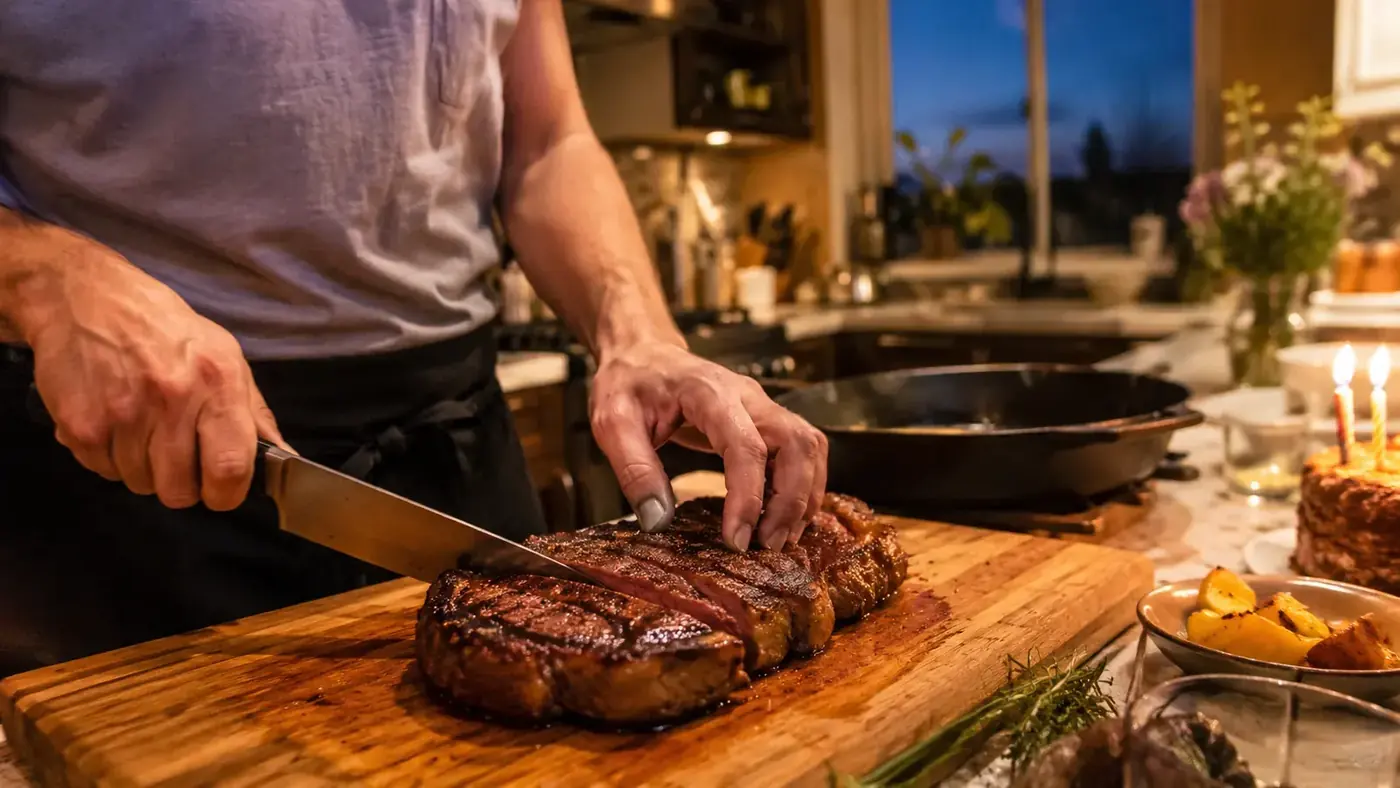
My husband asked for a steak dinner instead of a restaurant reservation for his birthday, and I said yes before I thought through what that actually meant on a Tuesday with two kids who still needed dinner by six. A good ribeye at home usually means one of two outcomes in my kitchen, a gray edge because the pan got too hot too fast, or a cool center because I pulled the steak too early out of nerves. The Anova Precision Cooker Nano 2.0 is the reason that stopped being a coin flip in my house. I already had the Anova living in the drawer next to my stove for weeknight chicken, so testing it on steak for an actual birthday dinner felt like the natural next step instead of a gamble.
Steak turned out to be the easiest thing I've cooked with the Anova, easier in some ways than chicken, because a ribeye or a strip steak forgives a wider time window than a lean cut ever will. The water bath brings the whole steak to your target doneness edge to edge, no gray ring circling a pink center, and all that's left for you to do at the end is build a hard, fast crust in a hot pan. This is the exact method I used for that birthday dinner, and it's the one I'm walking through here step by step, from bagging the steak to the final sear.
Tired of guessing whether the middle is actually done?
The Anova Precision Cooker Nano 2.0 holds your water bath at the exact temperature you set, so a ribeye or strip steak comes out the same shade of pink from edge to edge. Check today's price and current availability on Amazon before your next steak night.
Amazon Check Today's Price on Amazon →Step 1: Season and Bag the Steak
I season the steak simply, kosher salt, black pepper, maybe a smashed garlic clove and a sprig of thyme tucked into the bag, and nothing more complicated than that. Salt does more here than it would on a quick pan-seared steak, since the steak sits in that seasoning for an hour or more instead of the few minutes before it hits a hot skillet, so the flavor actually has time to work into the meat instead of just sitting on the surface.
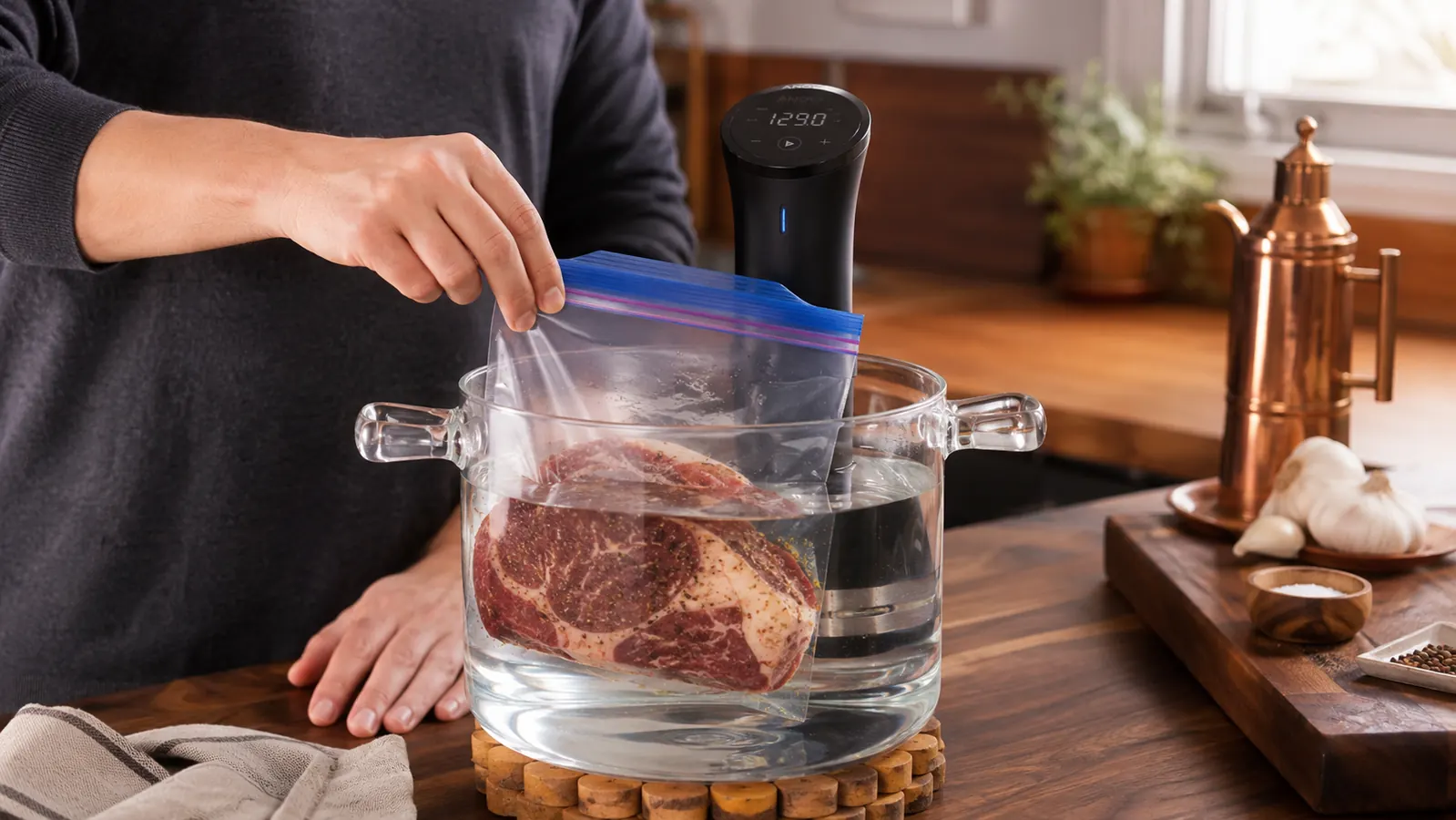
For the bag itself, I use a zip-top freezer bag and the water displacement method rather than a vacuum sealer, since I don't own one and it's never made a real difference in how the steak turns out. I lower the bag slowly into the pot of water with the top corner still open, let the water pressure push the air out around the steak, then seal the last inch right at the surface. A steak that still has air pockets trapped against it will float and cook unevenly, so getting this part right matters more than the seasoning does.
I've started prepping two steaks at once even on nights when only my husband and I are eating, since a spare bagged steak keeps in the fridge for a day or two before it needs to go in the water, and having a backup ready means one ruined sear doesn't derail dinner. It also means leftovers are a real second dinner instead of a sad reheated slab, since a steak that was already cooked evenly through the water bath reheats far better than one that was pan-cooked hot all the way through the first time.
Step 2: Set the Water Bath to Your Target Doneness
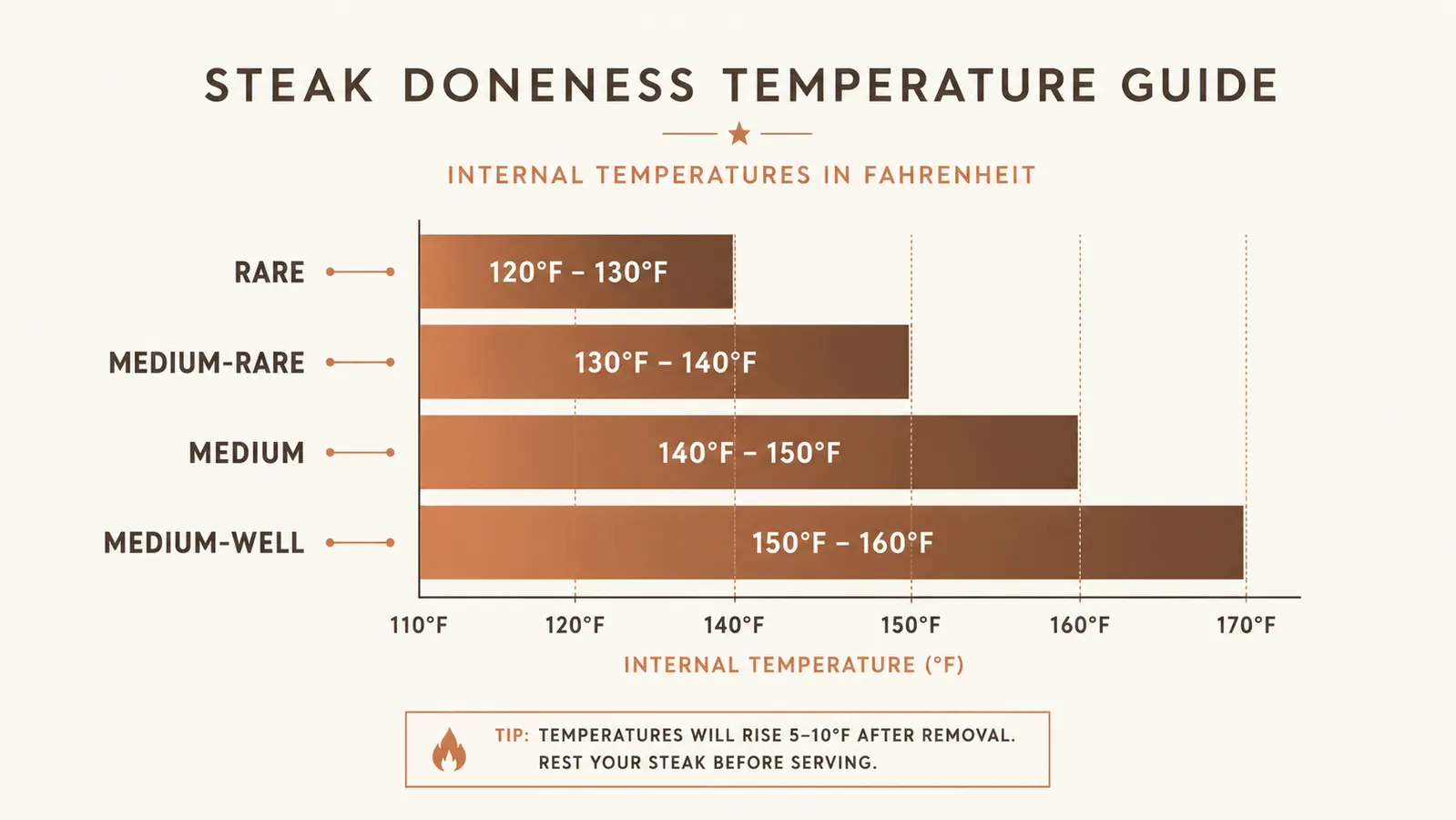
This is the step that actually removes the guesswork. I run my water bath around 129 to 130 degrees Fahrenheit for a medium-rare ribeye, which lands right in the middle of most guidance for that doneness level, but everyone in my house has a different preference, so I've also run it closer to 135 for my father-in-law, who likes his steak a shade past medium-rare, and closer to 125 for my husband on nights he wants it rarer than I'd order for myself at a restaurant.
I don't try to remember these numbers from memory anymore. The Anova app has a built-in doneness chart for different cuts and thicknesses, and there's also a printed reference card in the box, so I check one of those every single time instead of guessing. A few degrees matters more with steak than it ever did with the chicken I usually run through this same setup, so I'd rather glance at the manufacturer's chart for thirty seconds than serve a steak that's not what someone actually asked for.
I keep a small card taped inside the cabinet with the exact numbers for the cuts we eat most, ribeye at 130, filet at 129, strip steak at 132, because thirty seconds of second-guessing while everyone's hungry at the counter is thirty seconds too many. Your own numbers might land a few degrees different depending on how your household likes steak done, and that's fine, the manufacturer's chart is a starting point to adjust from, not a rule that overrides your own taste.
Step 3: Give It Time, the Water Bath Isn't in a Hurry
A one-inch steak generally needs about an hour in the water bath to come fully up to temperature all the way through, and a thicker cut, anything closer to two inches like a good bone-in ribeye, wants closer to two hours. Unlike a lean cut of chicken, steak has enough fat and connective tissue that it tolerates sitting in the water bath longer than the minimum without turning mushy, up to about four hours for most steak cuts, according to the same chart I mentioned in the last step.
That window is actually the most useful part of this whole method on a birthday dinner or any night with people arriving at slightly different times. I've put the bagged steak in the water an hour before anyone was supposed to show up and had it sit there another forty-five minutes past that without any real change in the result, which is the kind of forgiveness a stovetop steak never gives you once it's off the heat.
I also treat the water bath temperature itself as the real safety control here, not just the doneness preference. The chart in the Anova app pairs each temperature with a minimum time needed to bring the cut fully up to a safe internal temperature at that thickness, and I follow that minimum even on a night when the steak has already been in longer than planned, rather than pulling it early because I'm in a hurry. It's the one part of this whole method I don't shortcut, no matter how many other things are happening in the kitchen at once.
Step 4: Dry the Steak Completely Before It Meets the Pan
This step gets skipped the most and it's the one that ruins the crust more than anything else. I pull the steak out of the bag, set it on a plate lined with paper towels, and pat every visible bit of moisture off both sides and the edges before it goes anywhere near a hot pan. A wet steak in a hot pan steams instead of searing, and steam is the enemy of the dark crust that makes a steak actually look and taste like a steak.
I usually let the dried steak sit out for two or three minutes while I get the pan ripping hot, since a steak straight out of a warm water bath at 130 degrees doesn't need any additional resting the way a stovetop steak does. The whole inside is already evenly cooked to that temperature, so there's no juice redistribution to wait on, just a fast trip through a hot pan for color.
I also wipe down the cutting board and swap to a clean plate between the raw bagged steak and the cooked one, the same habit I'd use for any raw meat on my counter. It's a small thing, but it's become automatic enough now that I do it without thinking, right alongside patting the steak dry.
Step 5: Sear Hard and Fast, Then Baste
I use a 10-inch cast iron skillet for this and get it properly smoking hot before the steak ever touches it, a high smoke point oil first, avocado oil most nights, then the steak straight down onto the surface. Forty-five seconds to a minute per side is usually enough since we're only building color here, not cooking the inside any further. I don't move the steak around during that time either, since lifting it early is the fastest way to lose the crust that's forming underneath.
In the last thirty seconds I drop in a tablespoon of butter, another smashed garlic clove, and whatever fresh herb I have on hand, tilt the pan, and spoon that over the steak a few times before it comes out. That basting step is what took my birthday dinner from a good steak to the kind of steak my husband still brings up. It's an extra minute of standing at the stove, but it's the difference between a bare sear and something that actually smells like a steakhouse in my kitchen.
The first few times I did this, I pulled the steak the second it looked done and lost most of the crust I was going for. Now I wait for an actual deep brown color to form before flipping, even if that means holding it in the pan a few seconds longer than feels natural, since the inside is already exactly where I want it and the outside is the only thing left to get right.
What Else Helps
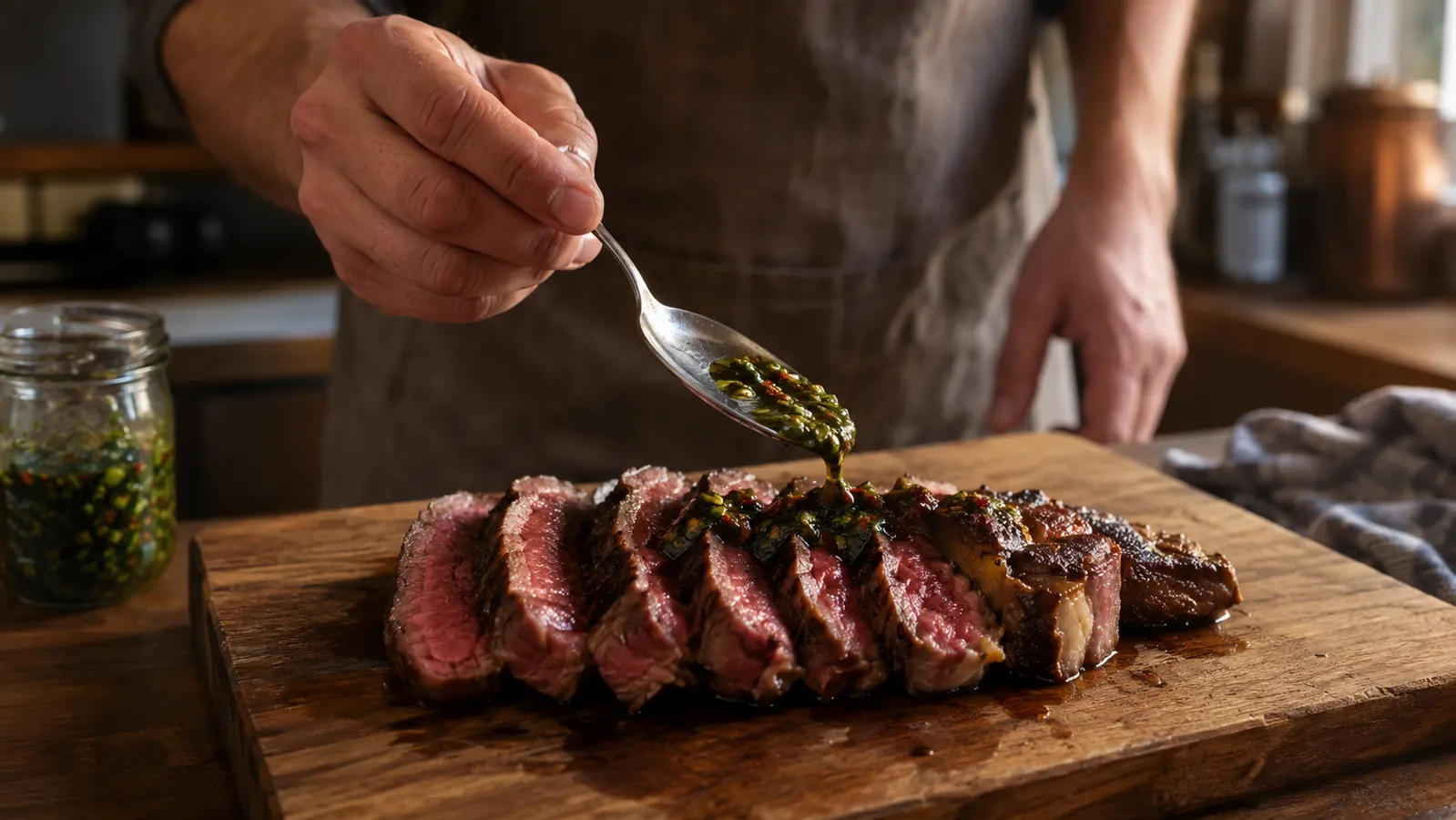
A simple board sauce made from the resting juices, a little olive oil, chopped parsley, and a splash of red wine vinegar poured over the sliced steak on the cutting board has become the one extra step I never skip anymore, since it takes maybe two minutes and does more for flavor than another five minutes of anything else in this process. Slicing against the grain matters here too, more with a strip steak than a ribeye, since the wrong cut can make even a perfectly cooked piece of meat feel tougher than it actually is.
I've also started running vegetables through the same water bath in a separate bag when I want a completely hands-off side, carrots or green beans with a pat of butter, timed to come out about twenty minutes before the steak so I have room in the pan for the sear. It's not required, but on a night when I'm also getting kids fed and the table set, one less pan to manage is worth planning around.
None of this replaces a good instant-read thermometer as a final check, especially the first several times you try a new cut, since confirming the water bath actually reached the number on the display before you drop the steak in is worth the extra minute. I still keep mine in the drawer next to the Anova for exactly that reason, more out of habit than doubt at this point.
I used to think a good steak meant standing over a hot pan the entire time, guessing. Now the guessing happens once, at the dial, and the pan just gets to do the one job it's actually good at.
Ready to stop guessing on steak night too?
If chicken already earned this device a spot in your kitchen, steak is the next thing worth trying. Check today's price on the Anova Precision Cooker Nano 2.0 and see if it's in stock before your next steak night.
Amazon Check Today's Price on Amazon →