
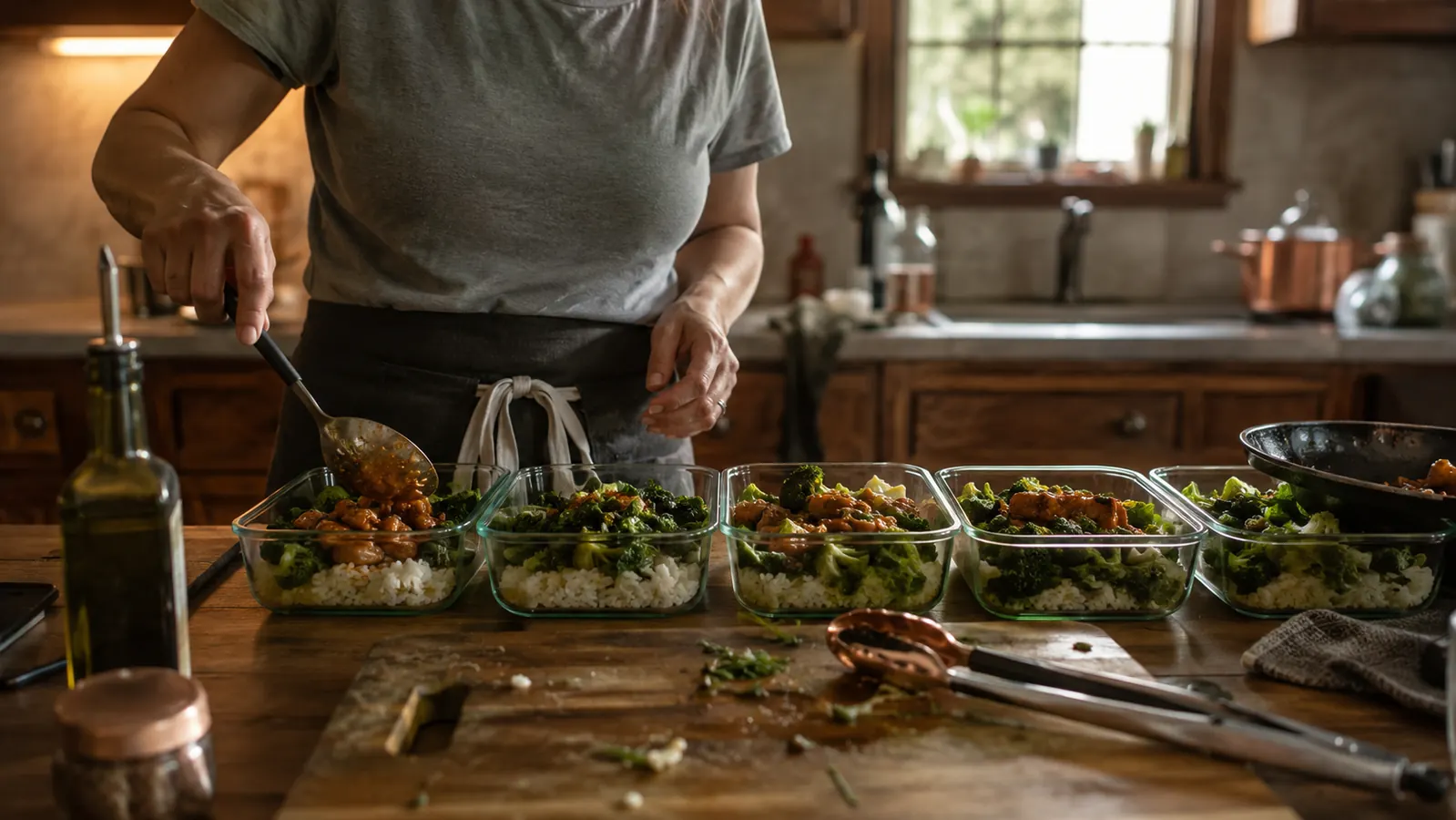
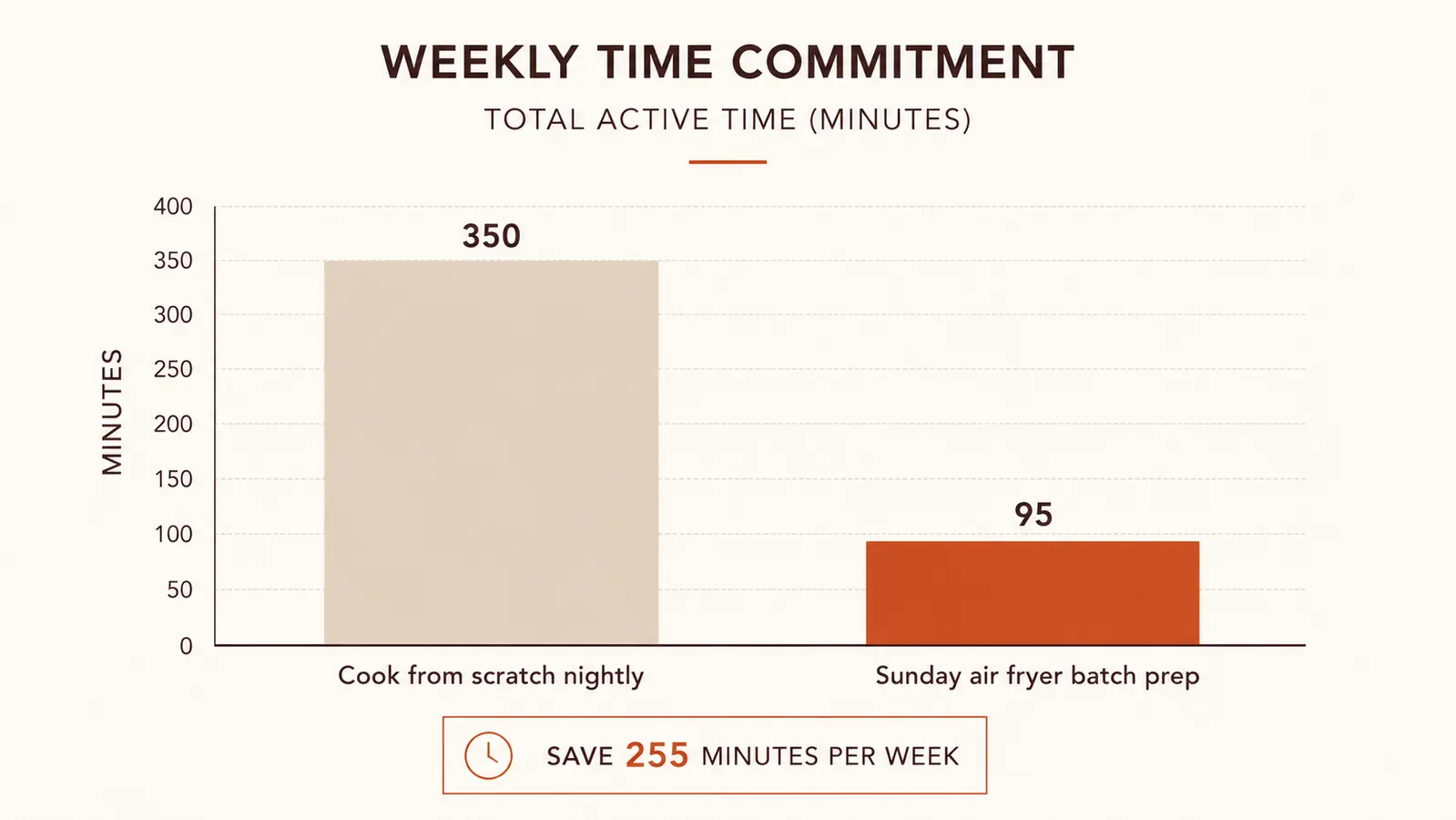
Sunday afternoon used to mean two hours standing at my stove, and by six o'clock on Wednesday I still ordered pizza anyway. The plan always looked solid on paper: chicken breasts, rice, roasted vegetables, three nights covered. The problem was execution, because a sheet pan of vegetables takes eighteen minutes in a four hundred fifty degree oven that also heats my whole kitchen in July, and I was never actually free for two straight hours on a Sunday to make it happen.
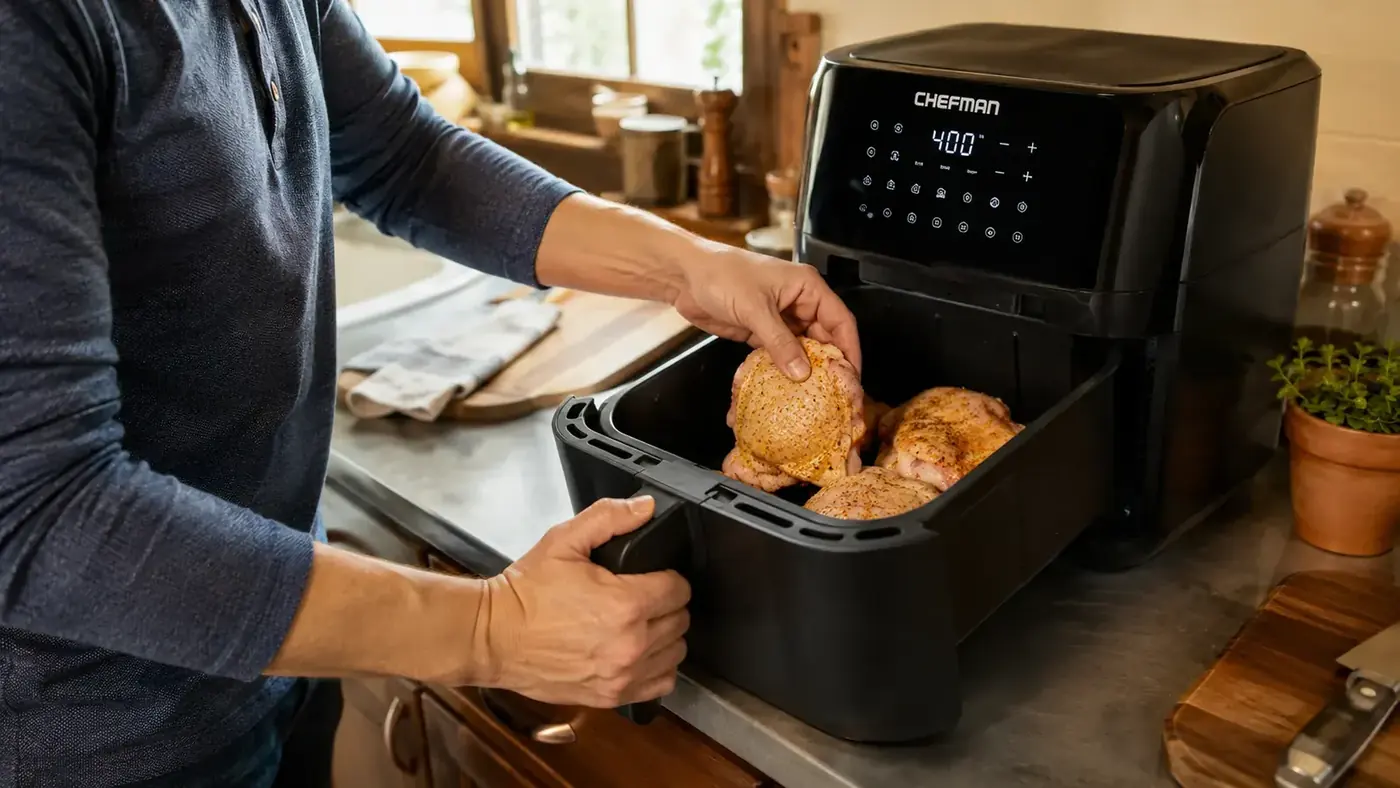
I stopped fighting my oven for counter space about a year ago when I moved my meal prep entirely over to my Chefman air fryer, the one sitting on the counter next to my toaster because it earned that spot fair and square. Instead of one giant tray that burns on the edges or stays soggy in the middle, I run three or four smaller batches through the Chefman's basket, back to back, while I load the dishwasher and answer texts at the counter. Four chicken thighs, a pan of broccoli, a tray of sweet potato cubes, done in under an hour, no oven preheated to death in the process.
What changed my actual week wasn't just the appliance, it was breaking the whole job into small batches instead of one big cook. Nobody has two uninterrupted hours on a Sunday, but almost everyone has five or six ten-minute windows between laundry loads, a kid's practice, and answering the door. This method is built for that reality, not for a fantasy version of Sunday where the house is quiet and you're standing at the stove with a glass of wine.
Tired of Sunday prep taking longer than it saves?
See today's price and current availability for the Chefman Multifunctional Digital Air Fryer on Amazon before you plan your next batch.
Amazon Check Today's Price on Amazon →Step 1: Build Your List Around What Actually Reheats Well
This is the step I skipped for the first six months and paid for every single week. Not every protein or vegetable survives being cooked ahead and reheated three days later. Bone-in, skin-on chicken thighs hold their moisture far better than boneless breasts, which turn to sawdust by Thursday no matter how carefully you cook them the first time. I buy a family pack of thighs, usually eight to ten pieces, and that covers two batches for the week.
On the vegetable side, broccoli, brussels sprouts, sweet potato cubes, and carrots all hold their texture through a reheat. Leafy greens, zucchini, and anything watery like tomatoes turn limp and sad by day three, so I save those for the night I'm actually cooking fresh, not for the batch. My shopping list has become boring and repetitive on purpose, because boring is what survives a Wednesday.
I also started buying in slightly larger quantities than one week needs, since freezing an extra batch of raw seasoned chicken thighs means I can skip the shopping trip entirely every other week. The list itself lives on a sticky note on my fridge, the same eight or nine items rotating, which cuts down decision fatigue at the store on a Saturday when I'd rather be anywhere else.
A few things reliably go bad by Thursday no matter how carefully you store them. Breaded chicken tenders lose their crust fast once sealed into a container, so those get made fresh instead of batched ahead. Rice and pasta go gummy and clump in the fridge, so grains stay a same-day step. Bone-in proteins, roasted vegetables, and dense root vegetables like sweet potato are my whole filter for what earns a spot in the Sunday batch.
Step 2: Batch the Proteins First, While the Basket Is Still Cold
I season everything the night before and keep it covered in the fridge, so Sunday afternoon is just loading and running the Chefman, not chopping and marinating from scratch. Chicken thighs go in first because they take the longest and I want the basket to start clean before any vegetable oil residue is in there. I run eight thighs in two batches of four, single layer, no overlapping, at 380 degrees for about eighteen to twenty minutes, flipping once halfway.
The Chefman's preset for chicken takes the guesswork out of this, but I still check with a meat thermometer, aiming for 165 degrees at the thickest part before anything comes out. I learned the hard way that trusting a preset blindly on bone-in cuts can leave you a few minutes short, and there's no fixing that after it's already portioned into containers for the week.
For variety across the week I use two different seasoning blends on the two batches, usually a simple garlic and paprika rub on one and a lemon pepper on the other, so I'm not eating the exact same flavor five nights in a row. A light coating of oil before seasoning helps the skin crisp up in the Chefman instead of staying pale and rubbery, which matters more for reheats than for food eaten fresh out of the basket.
Step 3: Run the Vegetables Right After, No Need to Wash the Basket
Once the chicken is out and resting, I go straight into vegetables using the same basket. The little bit of chicken fat left behind actually helps the broccoli and sweet potatoes crisp up instead of steaming, so I don't bother wiping it out between batches. Broccoli florets and brussels sprouts run about twelve minutes at 400 degrees, tossed once halfway through. Sweet potato cubes need closer to fifteen minutes at the same temperature because they're denser.
I keep these in separate batches rather than mixing them in one basket, because different vegetables finish at different times and I'd rather have one perfectly done tray than a mixed tray with half-crisp broccoli and half-mushy sweet potato. It's an extra ten minutes of total time, but it's the difference between food I want to eat on Wednesday and food I'm forcing myself through.
I toss the vegetables with just a little olive oil and salt before they go in, nothing fancier than that, and I run this step while the chicken is resting on its cooling rack. That overlap is the real time saver in this whole method: nothing is sitting idle, and by the time the vegetables are done, the chicken has already cooled enough to portion.
Step 4: Cool Completely Before You Portion Into Containers
This step feels like it slows you down, and it does, but skipping it ruins everything. Sealing hot chicken and vegetables into a container traps steam, and that trapped moisture is what turns crispy skin and roasted edges into a soggy mess by the next day. I set everything on a wire cooling rack on the counter for about twenty minutes before it touches a container lid.
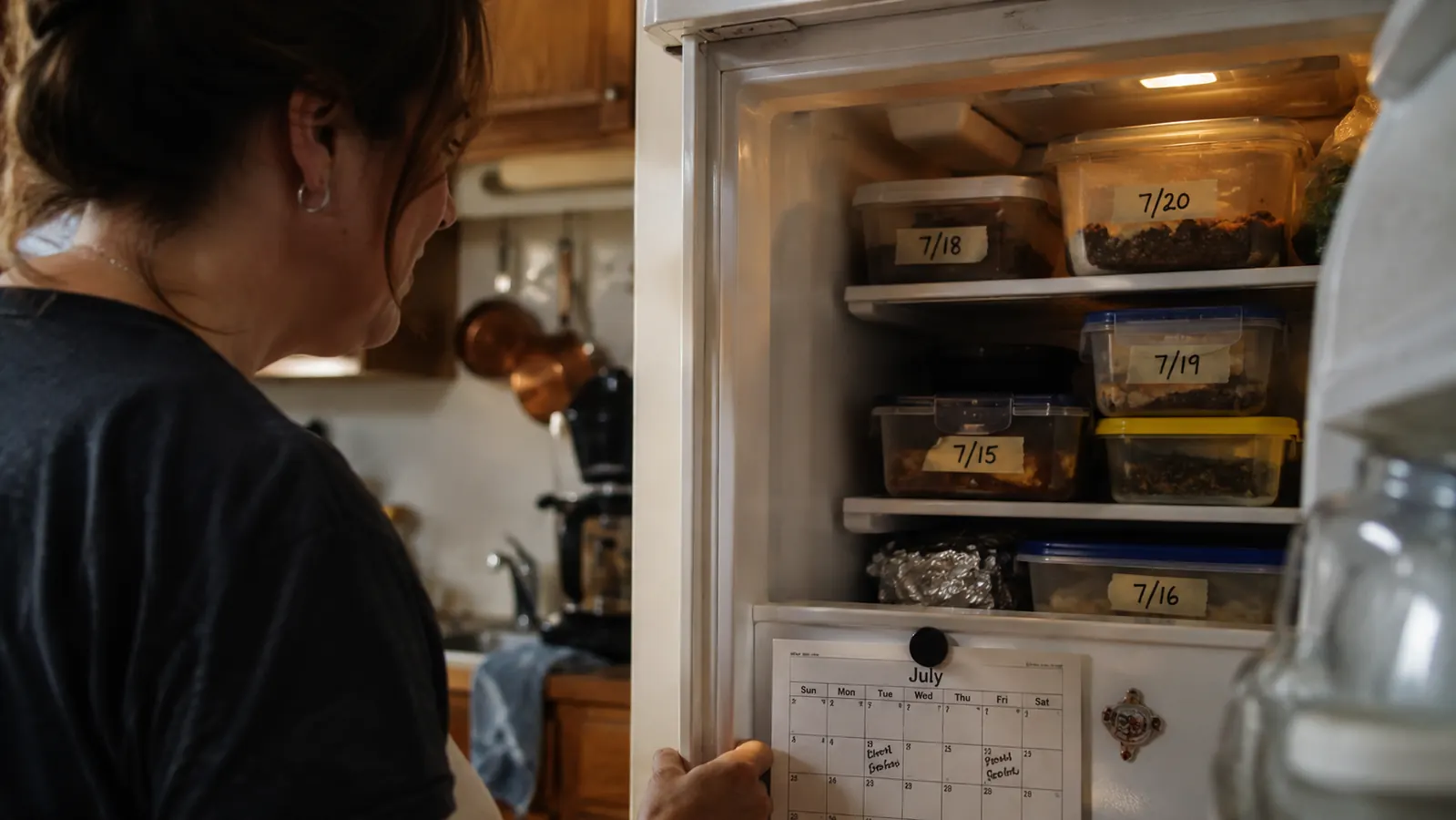
I portion into five identical glass containers, two chicken thighs plus a scoop of vegetables in each, and label the lids with a strip of masking tape and the date. Four go straight into the fridge for the week, and if I've doubled the batch, the fifth goes into the freezer as a backup for whatever night actually falls apart. Glass over plastic matters here too, since these containers go back into the air fryer basket for reheating and plastic won't survive that.
I follow a simple three-day rule for the fridge and label anything I'm not eating by Wednesday for the freezer instead, so nothing sits in the back of the shelf going bad while I forget it's there. A cheap set of matching glass containers with vented lids has done more for this routine than almost any other single purchase in my kitchen.
Step 5: Reheat in the Air Fryer, Not the Microwave
The microwave is where good meal prep goes to die. It turns crisp chicken skin rubbery and leaves vegetables either cold in the middle or overcooked at the edges. On a weeknight, I pull a container out of the fridge, tip the chicken and vegetables straight into the Chefman's basket, and run it at 350 degrees for four to five minutes. That's it. The skin re-crisps, the vegetables come back to life, and it genuinely tastes like it was cooked that night.
Rice and other grains I usually just microwave separately, since they don't need the crisp factor and reheating a bowl of rice in the air fryer just dries it out. But anything with a texture worth protecting, chicken skin, roasted vegetables, leftover fries, goes back into the Chefman before it goes on a plate. This one habit is honestly the reason my meal prep survives past Tuesday most weeks.
This same reheat trick works for lunches, not just dinner. I'll pack a container for my own lunch and, if there's a toaster oven at work, use that instead, though it takes closer to eight minutes at a lower temperature to get the same result. The point isn't the exact appliance, it's giving the food dry, moving hot air instead of trapped steam.
Step 6: Know What to Prep Raw vs What to Cook Ahead
Not everything in my fridge on Sunday is fully cooked. Half my chicken thighs go into the Chefman right away, but the other half get seasoned raw, wrapped tightly, and frozen flat in a freezer bag for the following week. That way I'm not standing at the grocery store twice a month, I'm just pulling a bag of already-seasoned raw thighs out to thaw in the fridge on Thursday night for the week after.
Vegetables go the other direction. I almost never prep raw vegetables ahead, because raw broccoli and cubed sweet potato sitting cut in the fridge for days starts to dry out and lose flavor before it even touches the basket. Vegetables get roasted the same Sunday they're bought, then reheated all week, while proteins are the one flexible piece I can freeze either raw or cooked depending on how much time I actually have on any given Sunday.
What Else Helps
A few small things made this routine stick beyond just the steps above. I keep a second set of containers so I'm never scrambling to wash one mid-week just to portion new food. I also lean on the Chefman's dehydrate setting on lazier Sundays to turn extra vegetables into simple snacks for lunchboxes instead of letting them go soft in the crisper drawer. And on weeks when I want more variety, the rotisserie function handles a whole chicken while I'm running vegetable batches through the basket at the same time, which stretches one Sunday session into more meals without adding real effort.
I also plan my grocery list around whatever protein is actually on sale that week, since sticking rigidly to one exact cut every Sunday gets expensive and boring fast. Thighs one week, drumsticks the next, a pork tenderloin cut into medallions when it looks good at the counter. The batching method stays the same no matter which protein I'm running through the basket, which is really the whole point. Once you understand the rhythm, proteins first, vegetables right after, cool completely, portion, reheat hot and dry, it stops mattering exactly what's in the container.
Container choice matters more than people expect. I use rectangular glass containers with vented silicone lids, since a tight seal traps steam and a loose lid lets the fridge dry everything out overnight. Round containers waste basket space when reheating two portions side by side, so I stick to rectangles that sit flat in the Chefman's basket without tipping over mid-reheat.
Reheating straight from a cold, just-out-of-the-fridge container takes about a minute longer than reheating something that's had ten minutes on the counter first. If a container went into the freezer instead, I move it to the fridge the night before rather than reheating it frozen solid, since a frozen center means the outside overcooks before the middle is even warm.
I'm not meal prepping to be impressive. I'm meal prepping so that six o'clock on a Wednesday stops being a crisis, and that's the only test that actually matters.
Ready to trade your Sunday scramble for five done dinners?
Check today's price on the Chefman Multifunctional Digital Air Fryer and see if it's in stock before your next prep day.
Amazon Check Today's Price on Amazon →