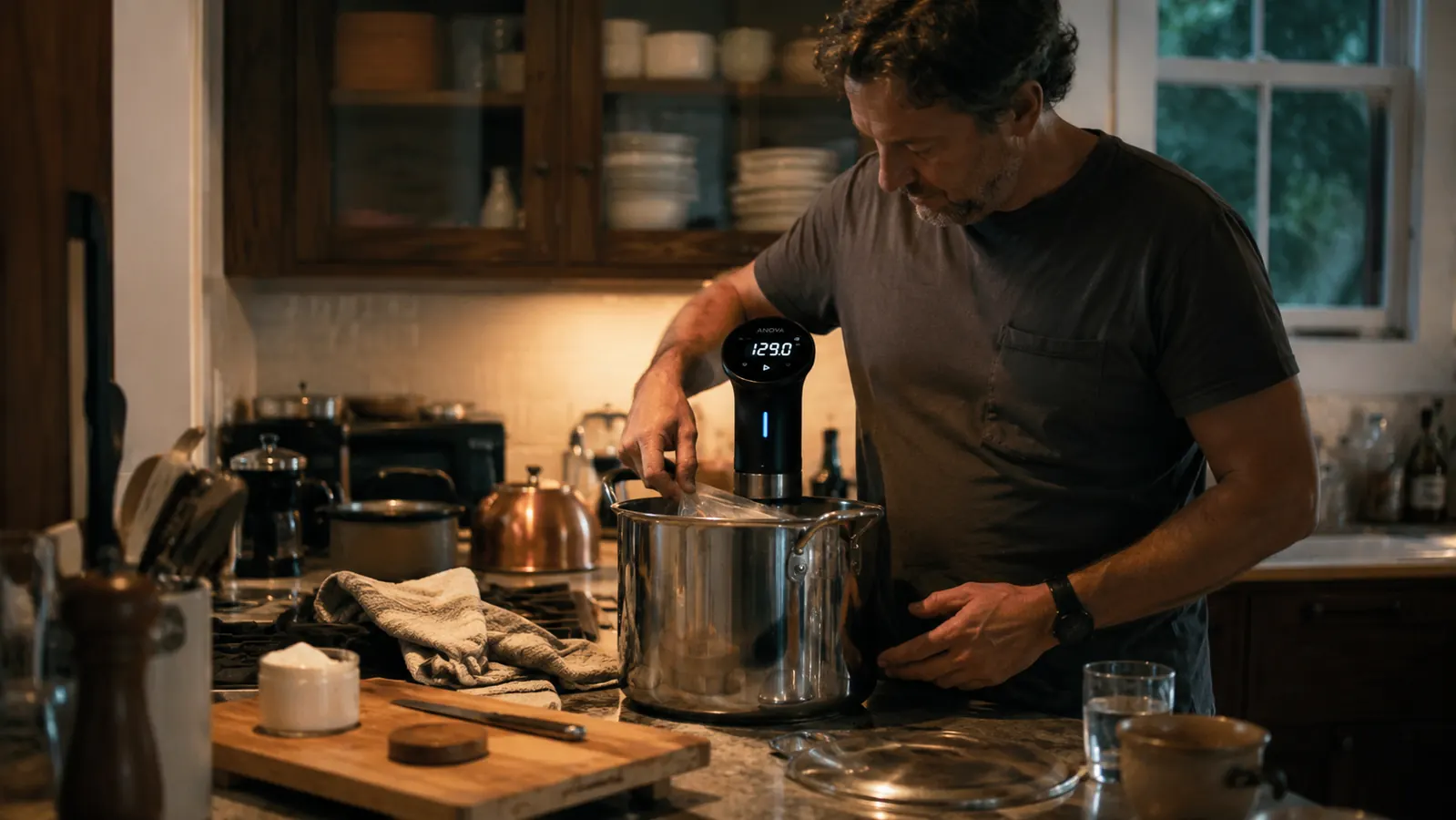
Nobody hands you a warning label with an Anova sous vide that says here is everything the product photos leave out. I bought my Anova Precision Cooker Nano 2.0 about a year ago this month, right after a Fourth of July cookout where I served my husband Dale a steak that looked perfect on the outside and gray straight through the middle, the kind of dinner that makes you want to haul the whole grill to the curb. The Anova promised that exact problem would never happen again, and on that one point it has completely delivered. What nobody warned me about was everything around it: the extra gear I ended up buying that first month, the two dinners I actually ruined while I was still figuring out the real technique, and how differently this thing behaves once you get past the honeymoon week.
A year of near-weekly use later, I still reach for the Anova almost every Friday for steak night, but I want to walk through the version of this review that doesn't just repeat what's printed on the box. Some of what follows is small, some of it cost me actual money in extra containers, and none of it would have stopped me from buying it, but all of it would have been nice to know on day one.
The Quick Verdict
The Anova genuinely fixes overcooked steak and rubbery salmon, but it comes with real setup friction, extra gear costs, and quirks the manual never mentions.
Amazon Check Today's Price →Tired of steak that looks done but isn't?
The Anova Precision Cooker Nano 2.0 holds your water bath at the exact temperature you set, so the center of the steak matches the crust every single time. See today's price and current availability on Amazon before you buy the extra gear I did.
Amazon Check Today's Price on Amazon →How I've Actually Used It
My first cook was salmon, not steak, and it was a mistake I made because I trusted a preset in the app without reading the fine print about carryover texture. I set it too high for what I actually wanted, and the fillets came out chalky rather than the silky texture I'd seen in every video. It took me a second attempt two days later, dropped to 122°F for forty-five minutes, to get the texture I was after. Nobody tells you that the presets are a starting point, not a guarantee, and that fish is far less forgiving of guesswork than beef.
Steak is where the Anova earns its keep in my house. I run a 1.5-inch ribeye or New York strip at 132°F for about ninety minutes, then finish it in a screaming hot cast iron pan for maybe forty-five seconds a side. Dale has stopped asking whether the middle is done, because it always is, and that alone has ended more low-grade dinner arguments than I expected a kitchen gadget to solve. My son Cole, who is fifteen and picky about texture more than flavor, is the one who actually asked to keep doing steak night this way after the first month, which told me this wasn't just me being sentimental about a new toy.
What I didn't expect was how much the routine itself would change. Steak night used to mean standing at the stove with tongs, guessing by touch. Now it means setting the Anova around 4:30, going to help with homework or start a side dish, and coming back at 6:00 to sear. The actual hands-on time dropped, but the mental math around timing everything else in the meal got a little more demanding, since the protein is locked into an exact finish time and the rest of dinner has to bend around it.
Once steak night felt solid, I started experimenting with weekend breakfasts, which is a use I never expected to care about. Eggs still in the shell, cooked at 167°F for thirteen minutes, come out with a texture somewhere between soft-boiled and custard, and my daughter Mia, who normally picks around eggs, has actually asked for them two Saturdays in a row. It's a small, almost silly use case, but it's part of why the unit gets pulled off the shelf more often than just once a week.
The Container Problem Nobody Mentions
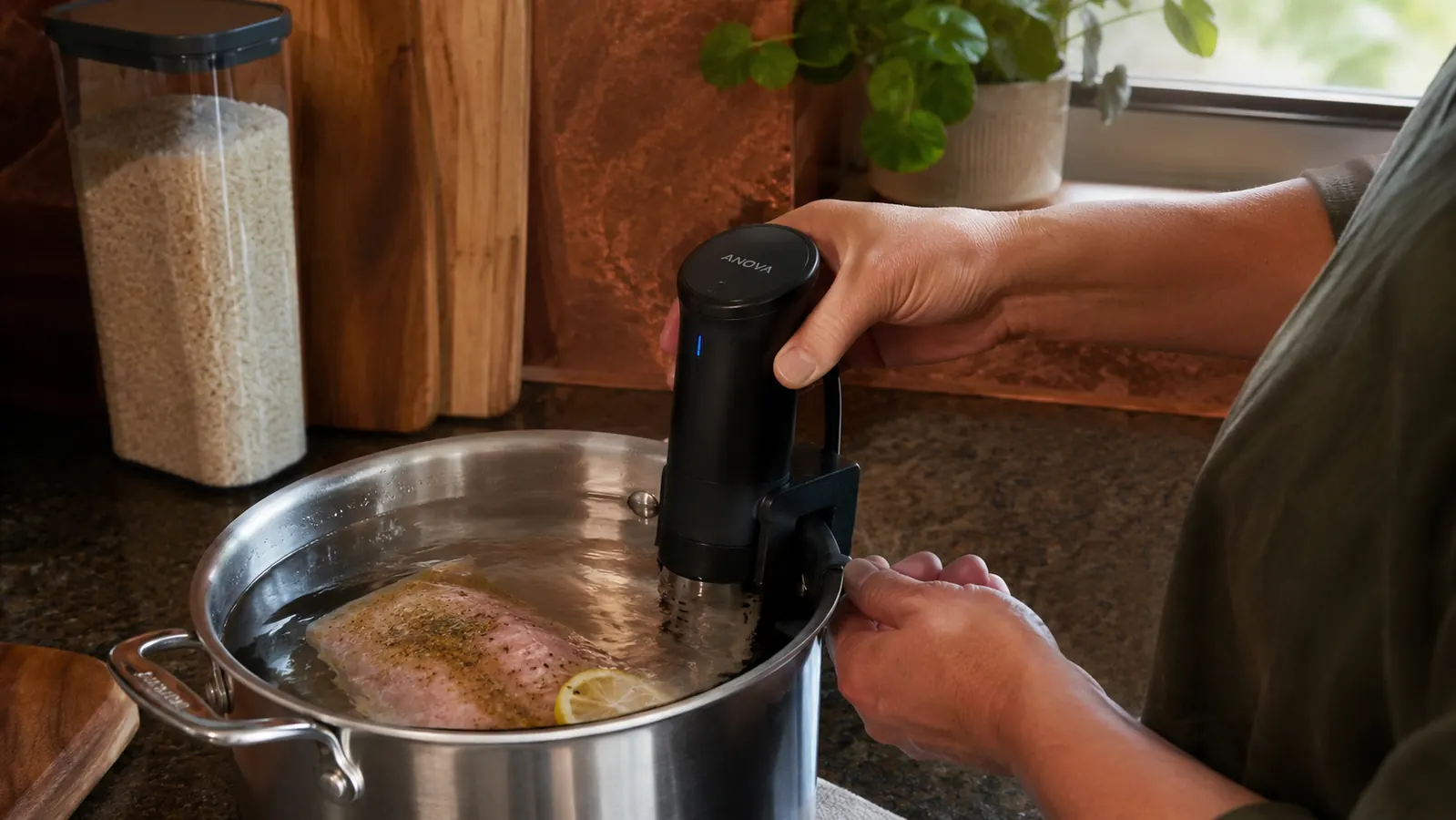
This is the part I really wish someone had told me before I bought the Anova. The clip is designed to grip the rim of a container, but it needs a certain depth of water below it to circulate properly, and my regular 8-quart stockpot is on the shallow side once you account for a full steak plus enough water to submerge it. The water line sat uncomfortably close to the rim more than once, close enough that I worried about splashing near the electrical housing during a longer cook. I ended up buying a separate 12-quart food-safe container specifically for sous vide, which is not something the box or the product photos ever mention you'll need.
That container purchase, plus a box of gallon-size freezer bags since regular sandwich bags are too thin and tear under water pressure, plus one replacement clip screw after the original one stripped slightly from repeated tightening, adds up to real money on top of the unit itself. None of it is expensive individually, but it's the kind of thing that should be mentioned somewhere in the setup instructions instead of learned the hard way.
Storage turned out to be its own small headache too. The marketing photos show the Anova sitting elegantly on an open counter, but mine lives on a pantry shelf next to the dedicated container, because my counter doesn't have room for either to sit out permanently. Getting both down, using them, then washing and drying the container before it goes back on the shelf adds a few extra minutes to the process that a lot of reviews gloss over.
I've also noticed a hairline crack starting near the hinge of the plastic clip after a year of clamping and unclamping it several times a week. It hasn't affected the grip or the seal so far, and I'm not worried about it failing tomorrow, but it's the kind of wear I wasn't expecting from a part that gets handled that gently. If yours is going to see this much repeat use, I'd treat the clip a little more carefully than I did the first few months.
What a Year of Real Cooks Looks Like
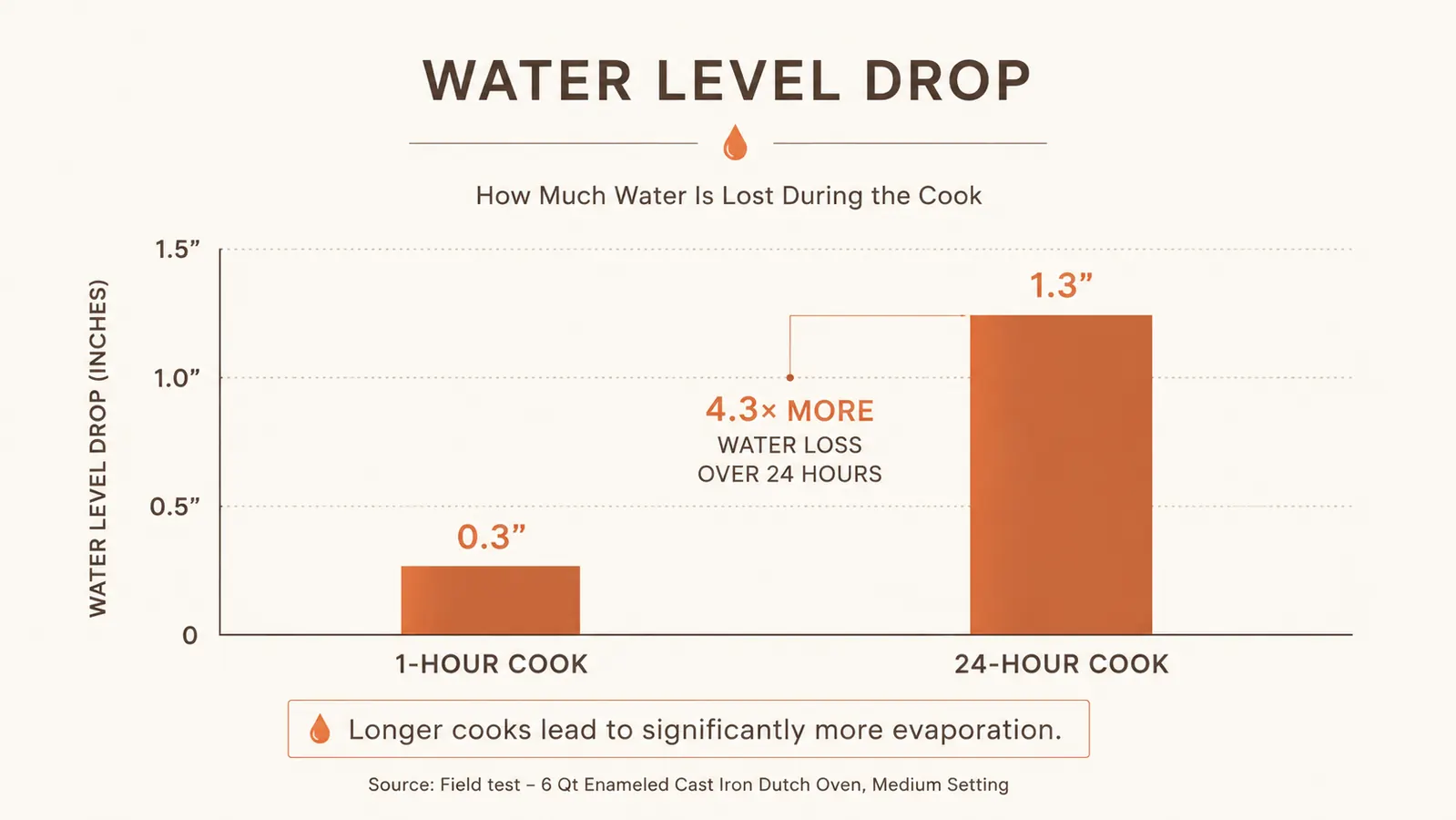
The cook that taught me the most was a 24-hour batch of short ribs I did for a birthday dinner in the spring. Nobody mentions that a cook that long loses a noticeable amount of water to evaporation, enough that I had to check and top it off twice overnight or risk the circulator running dry near the heating element. I now cover the container loosely with foil or plastic wrap for anything past four or five hours, which solves it, but it's not something the included booklet flags anywhere.
About four months in, the app pushed a firmware update that briefly changed how the unit paired, and for about a week it wanted me to reconnect over Bluetooth every single time instead of remembering my phone like it had before. It resolved itself after another update, but during that week I genuinely considered whether the connectivity issues were going to be a permanent annoyance rather than a one-time bug.
There's also a low hum the unit gives off during longer cooks, noticeable enough that I don't run it in the kitchen overnight if anyone's bedroom is close by. It's not loud in any objective sense, more like a box fan on its lowest setting, but if you're a light sleeper or have a bedroom near the kitchen, that's worth knowing before you plan an overnight short rib cook.
The short ribs themselves, once I'd worked out the evaporation issue, were the best thing I've served all year, tender enough to pull apart with a fork after a five-minute sear at the end. My mother-in-law asked for the recipe, and I had to explain that the actual recipe was mostly just patience and a machine holding a temperature steady for a full day, which felt a little anticlimactic to say out loud but was completely true.
The Setup Friction They Don't Put in the Box
Getting the Anova onto my home wifi the first time took longer than I expected, mostly because the app defaults to a Bluetooth-only connection unless you dig into settings to add wifi, and I didn't realize wifi gave me remote notifications until a coworker mentioned it weeks later. The instructions inside the box are thin on this point, so most of what I actually learned about the app came from trial and error and one YouTube video, not from Anova's own materials.
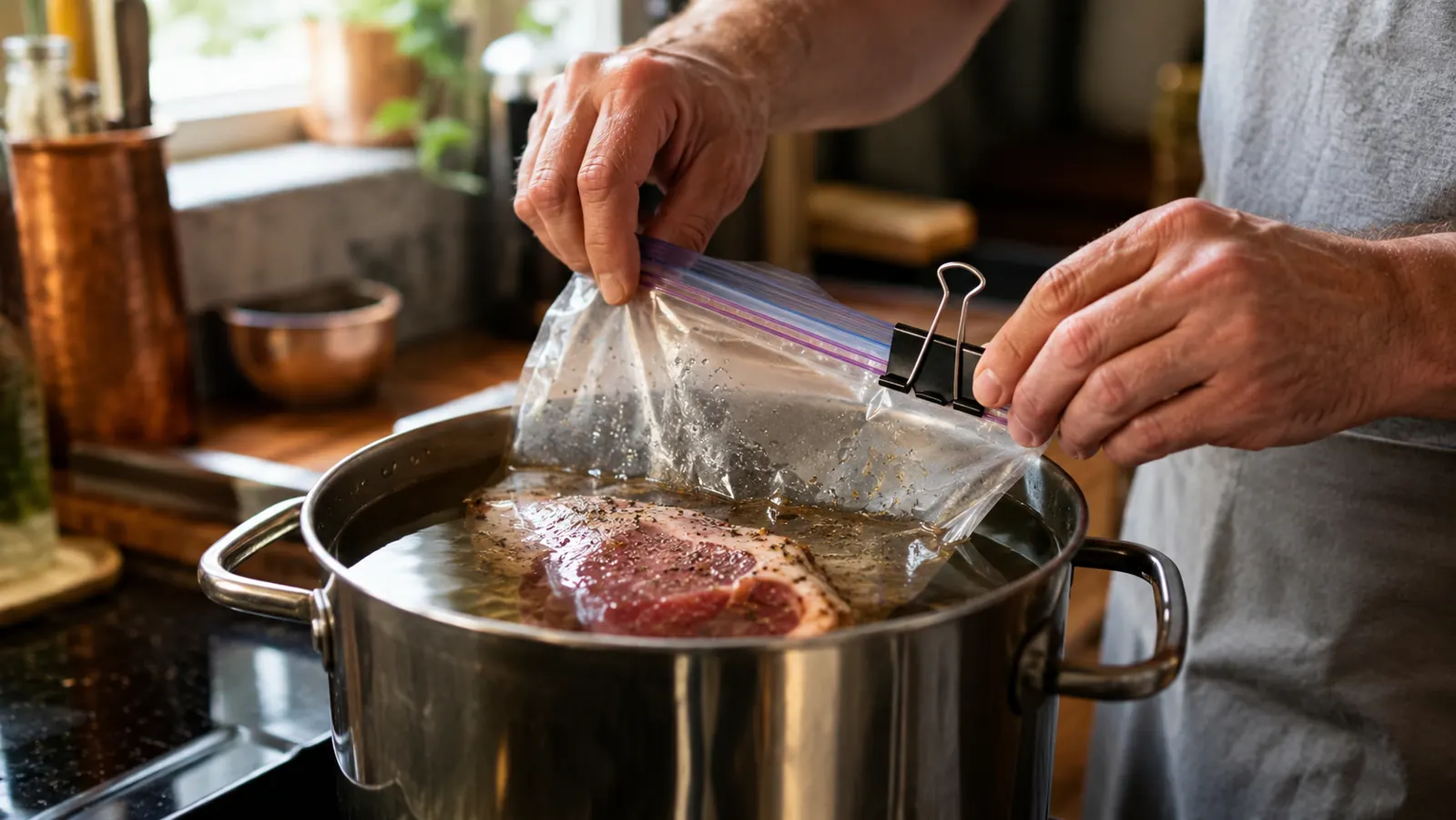
The bag itself is its own small learning curve. A gallon ziploc with air still in it floats, and a floating bag cooks unevenly because part of it sits above the waterline. The trick, which I picked up from a cooking forum rather than the manual, is the water displacement method: seal the bag most of the way, then slowly lower it into the water so the pressure pushes the remaining air out through the last inch of open zipper before you seal it completely. It works well and costs nothing, but it would have saved me one lopsided piece of chicken if it had just been printed on the insert.
Corn on the cob, which I tried on a whim in the summer, actually turned out better than I expected, sweet and evenly cooked through in about thirty minutes at 183°F. It's a small win, but it's one of those uses that never shows up in Anova's own marketing, which stays almost entirely focused on protein.
The small digital display on the unit is genuinely hard to read without pulling out reading glasses, especially in a dim kitchen at dinnertime, and I've bumped the target temperature by a degree or two more than once without noticing until I checked the app afterward. I've started confirming every setting through my phone instead of trusting the display alone, which works, but it's an extra step nobody mentions when they talk about how simple this is to run.
What I Considered Instead
Before buying, I looked at a couple of cheaper immersion circulators from lesser-known brands, and at using the sous vide setting built into my multicooker. The multicooker option didn't circulate the water at all, so I got noticeably uneven results on anything thicker than a chicken breast, with the outer edge closer to the heating element cooking faster than the center. I went with the Anova specifically because of how many long-term reviews mentioned reliability after a year or more of use, not just a good first month, and that held up for me.
I also briefly considered one of the all-in-one sous vide container kits that bundle a rack, lid, and container together at a higher combined price. I skipped it because I'd already have to buy a separate container anyway once I realized my stockpot wasn't ideal, and buying the pieces separately as I needed them ended up costing less overall, even if it meant a slower realization of what I actually needed.
What I Liked
- Steak and pork come out exactly the doneness you set, every time
- Corn, salmon, eggs, and short ribs all work once you dial in your own times and temps
- Runs independently even during the week the app was glitchy
- Firmware issues resolved on their own within a week
- Water displacement bagging method costs nothing and works well once you know it
Where It Falls Short
- Standard 8-quart stockpots may not have enough clearance, plan on a dedicated container
- Long cooks lose water to evaporation and need to be covered or checked
- Wifi setup and remote notifications aren't explained clearly out of the box
- Low hum during long cooks is noticeable near bedrooms
- Extra costs add up: container, thicker freezer bags, occasional clip hardware
- Small display is hard to read without double-checking the app
The Anova never lied about what it does to a steak. It just left out everything else you'd need to figure out on your own.
Who This Is For
If you already cook steak, chicken, or pork regularly enough to have been burned by uneven doneness more than once, and you don't mind buying a couple of extra pieces of gear to get the setup right, a year of use has made this worth it in my house. It's especially worth it if you already have a designated shelf for kitchen gear rather than needing everything to live out on the counter, and if you're the type who will actually try eggs or corn once the steak routine feels automatic.
Who Should Skip It
If you're hoping to use the same stockpot you already own for pasta with no other purchase, or if a low mechanical hum near your kitchen at night would genuinely bother you, it's worth going in with those expectations adjusted. It's also not the right fit if you want a shortcut with zero learning curve, since the bag technique, the container fit, and reading the tiny display all take a cook or two to get comfortable with.
A year in, the honest verdict still holds
Once you know about the container, the bags, and the evaporation, the Anova Precision Cooker Nano 2.0 is a genuinely solid pick for steak and pork night. See current pricing and availability on Amazon.
Amazon Check Today's Price on Amazon →