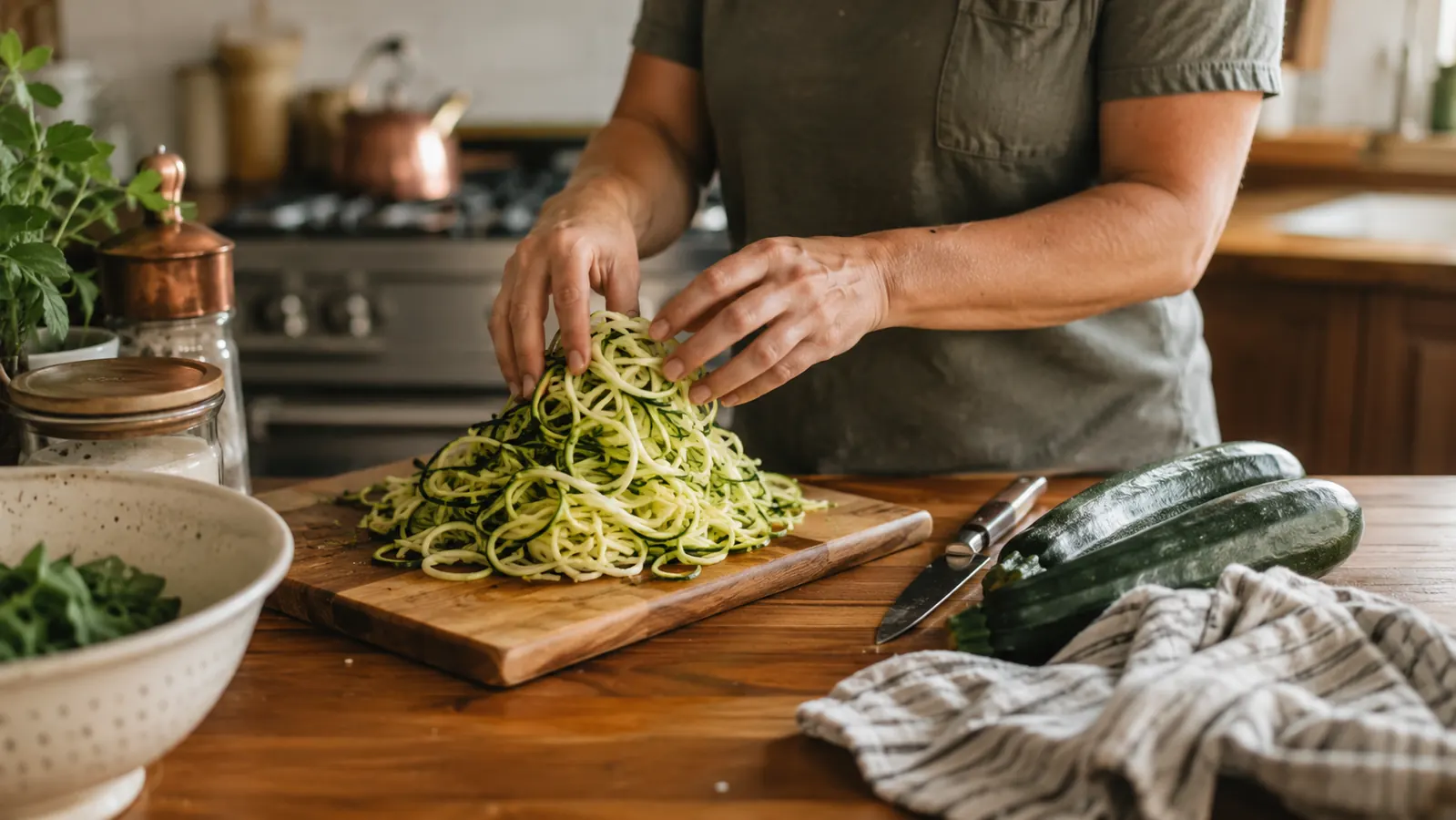
My zucchini noodle disasters all have the same shape, a sad heap of wet green threads sitting in an inch of water at the bottom of a bowl, twenty minutes after I thought dinner was already done. I made zucchini noodles the hard way for almost two years with a cheap handheld julienne peeler that cramped my wrist after four squash and still left me with noodles so short and uneven that half of them turned to mush before the sauce even hit the pan.
I switched to a Brieftons 5-Blade Vegetable Spiralizer last spring after my neighbor showed hers off at a cookout, and I was tired of my knuckles taking the hit from that peeler. The Brieftons cuts a noodle that actually holds its shape in a hot pan instead of collapsing into threads, and once I understood how the Brieftons blades work, the whole process stopped feeling like a fight. This is the exact routine I run now, from picking zucchini that won't fall apart to getting the water out before it ruins the sauce, on a random Tuesday when I've got maybe twenty minutes and two kids asking what's for dinner.
The first night I ran the Brieftons at my own counter, my younger son stood on a step stool asking to turn the crank himself, which never happened with the old peeler because there was nothing fun about that process. That's a small thing, but it's part of why the noodles actually get made now instead of me talking myself into boxed pasta at six o'clock. Once you've got a system that takes fifteen minutes instead of forty-five, zucchini stops being a special-occasion vegetable and turns into something you can reach for on a random Tuesday.
Tired of soggy noodles that never hold their shape?
See today's price and current availability for the Brieftons 5-Blade Vegetable Spiralizer on Amazon before your next grocery run.
Amazon Check Today's Price on Amazon →Step 1: Pick Zucchini That Will Actually Hold Its Shape
The zucchini itself matters more than people expect. I look for medium ones, roughly six to eight inches long and straight rather than curved, with skin that's firm and glossy, not soft or dented anywhere. The giant zucchini that show up at farmers markets in August, the ones the size of a baseball bat, are watery and full of loose seeds in the center, and they turn to noodle mush faster than anything else in the bin. A medium, firm zucchini also fits the feed tube on my spiralizer without me having to trim it down first, which saves a step.
I buy them a day or two ahead at most and keep them in the crisper drawer unwashed until I'm ready to cook, since moisture sitting on the skin speeds up softening. Right before I spiralize, I trim both ends flat with a paring knife so the zucchini sits square against the blade instead of wobbling as it turns. That flat cut also gives the crank something solid to grip, which matters once you're a few turns into a squash that's started to spin loose in your hand.
Yellow summer squash works through the Brieftons the same way zucchini does, so on weeks when the zucchini at the store looks tired, I'll grab squash instead without changing anything else about the process. I avoid anything pre-waxed or shrink-wrapped in plastic from the big produce bins, since that skin tends to be older stock held longer in storage, and older zucchini has already started losing the firmness that keeps a noodle intact. A quick squeeze test at the store, firm with a little give, tells me more than the sell-by sticker does.
Step 2: Load the Brieftons and Get the Right Blade Locked In
The Brieftons kit comes with five interchangeable blades, and for true noodles I always reach for the thicker spaghetti-style blade rather than the thin angel hair one, because the thin blade shreds a soft vegetable like zucchini into strands that fall apart the second they hit heat. The blade drops into the housing and locks with a quarter turn, no tools needed, and I've never had one slip loose mid-crank once it's seated right. I keep the blade I use most stored already clicked into the base so I'm not hunting through a drawer on a weeknight.
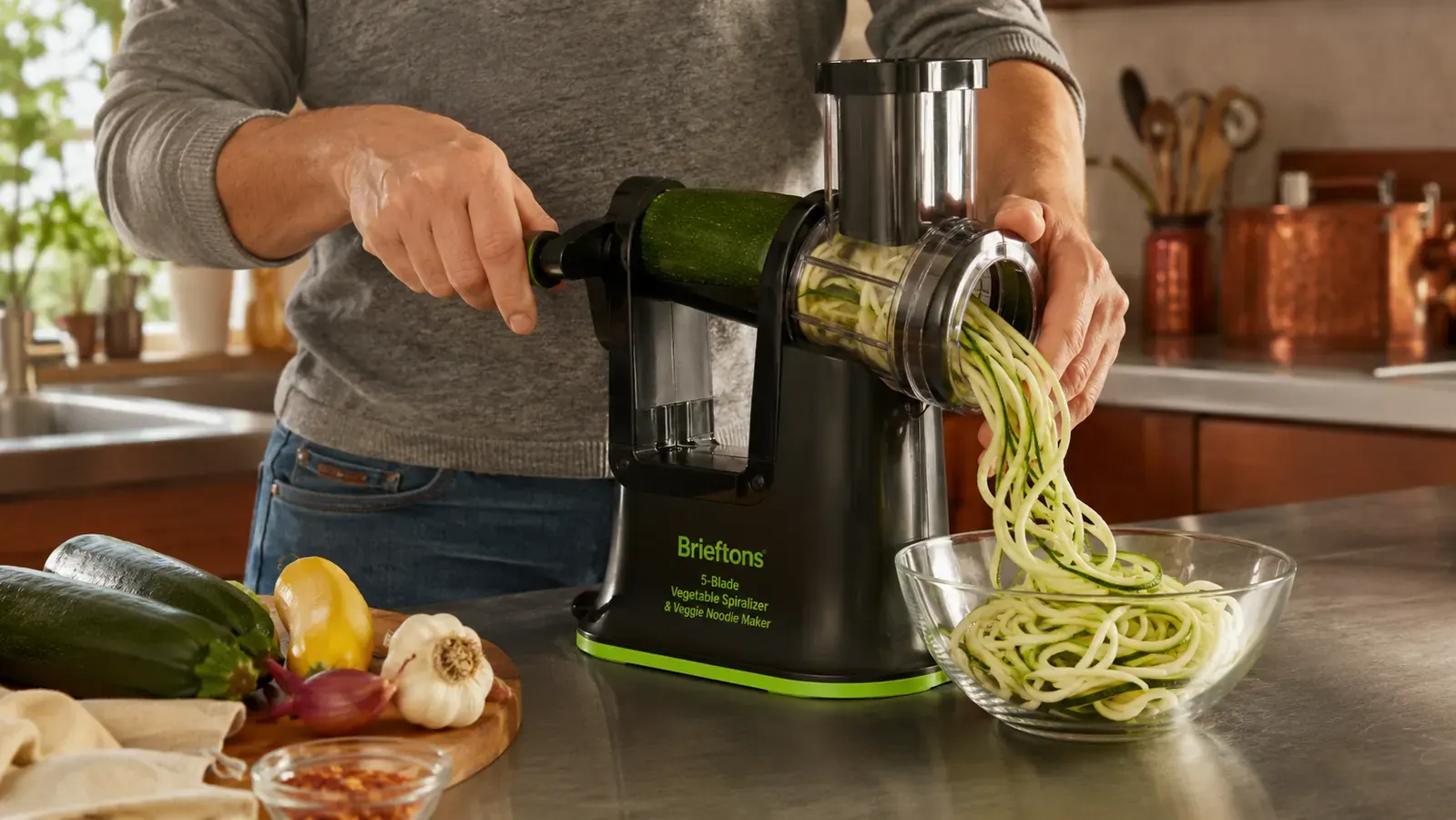
Before I load the zucchini, I press the Brieftons suction base down hard onto the counter and give it a firm push to make sure it's actually gripping the surface, not just resting on it. A spiralizer that slides across the counter mid-crank is how you end up with a scraped knuckle, so this thirty-second check is not optional in my kitchen. Once it's locked down, I fit the flat end of the zucchini into the holder, line it up with the blade, and start turning the crank in slow, even rotations rather than fast jerky ones.
Step 3: Crank Through It Without Making a Mess of the Counter
I set a wide, shallow bowl directly under the blade opening before I start cranking, because zucchini noodles come out fast once the machine gets moving and they'll spill straight onto the counter if there's nothing catching them. Steady, even pressure on the crank handle produces longer, more consistent strands than cranking in quick bursts, which tends to snap the noodles into short pieces that don't twirl well on a fork later. I turn until I feel the resistance drop off, which means the zucchini core is almost through.
There's always a small stub left in the holder once the crank stops pulling anything through, usually about an inch of core with the seeds still in it. I don't throw that piece out. I dice it small and toss it into whatever soup or stock is going in the freezer that week, since it's still perfectly good zucchini, just not shaped right for noodles. For a full dinner for four, I usually run two medium zucchini through the Brieftons, which gives me roughly four cups of loose noodles before any water cooks out.
Cranking speed matters less than people assume, but hand fatigue is real if you're running four or five zucchini back to back for a bigger batch. I switch hands halfway through a big batch rather than pushing through on one arm, and I've learned to let the weight of my forearm do the work instead of gripping the handle tight with my fingers. My older kid can turn the crank for about one whole zucchini before wanting a break, which is honestly about the same as my own limit on a tired weeknight.
Step 4: Drain and Salt the Noodles Before They Ruin the Sauce
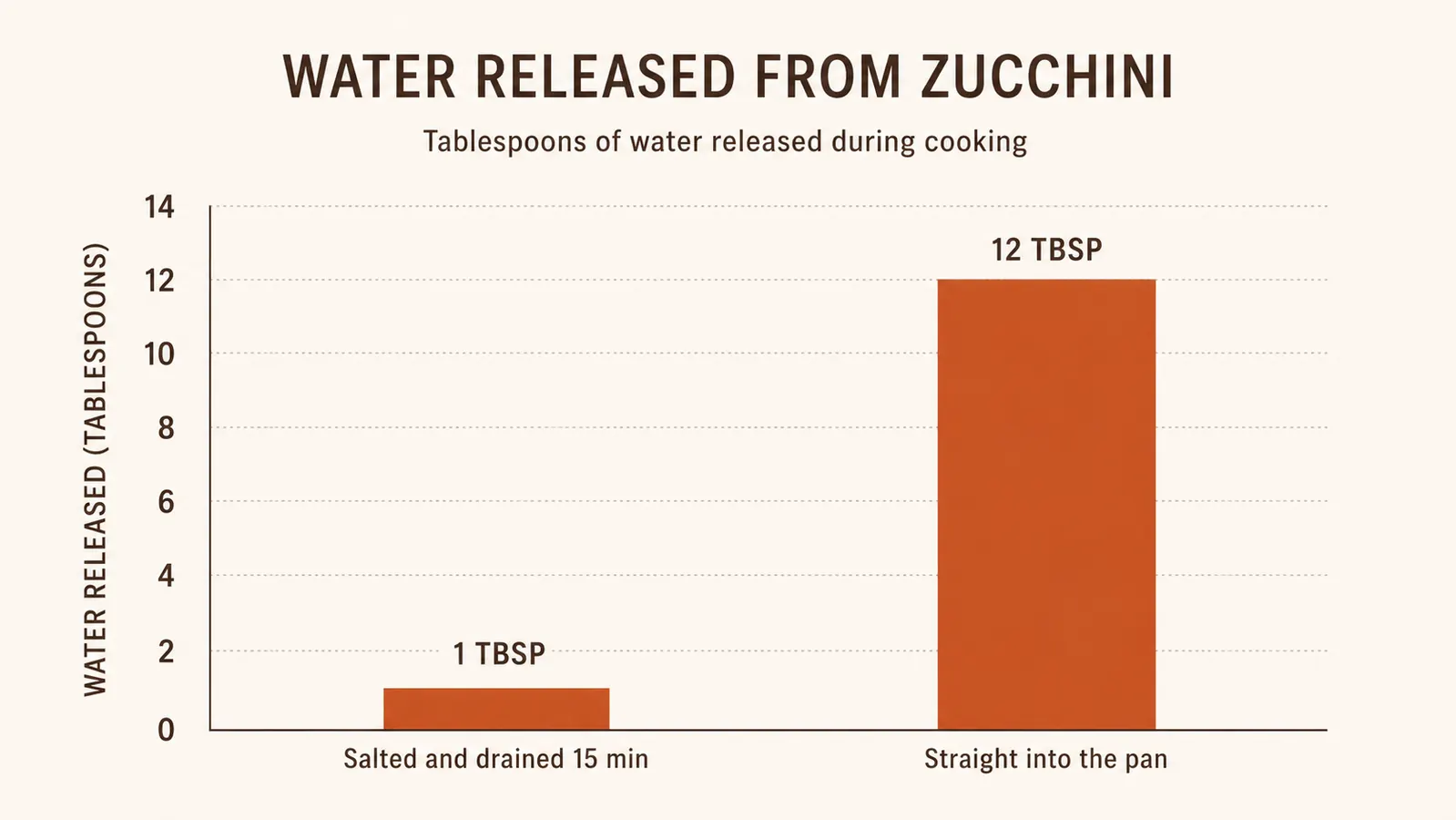
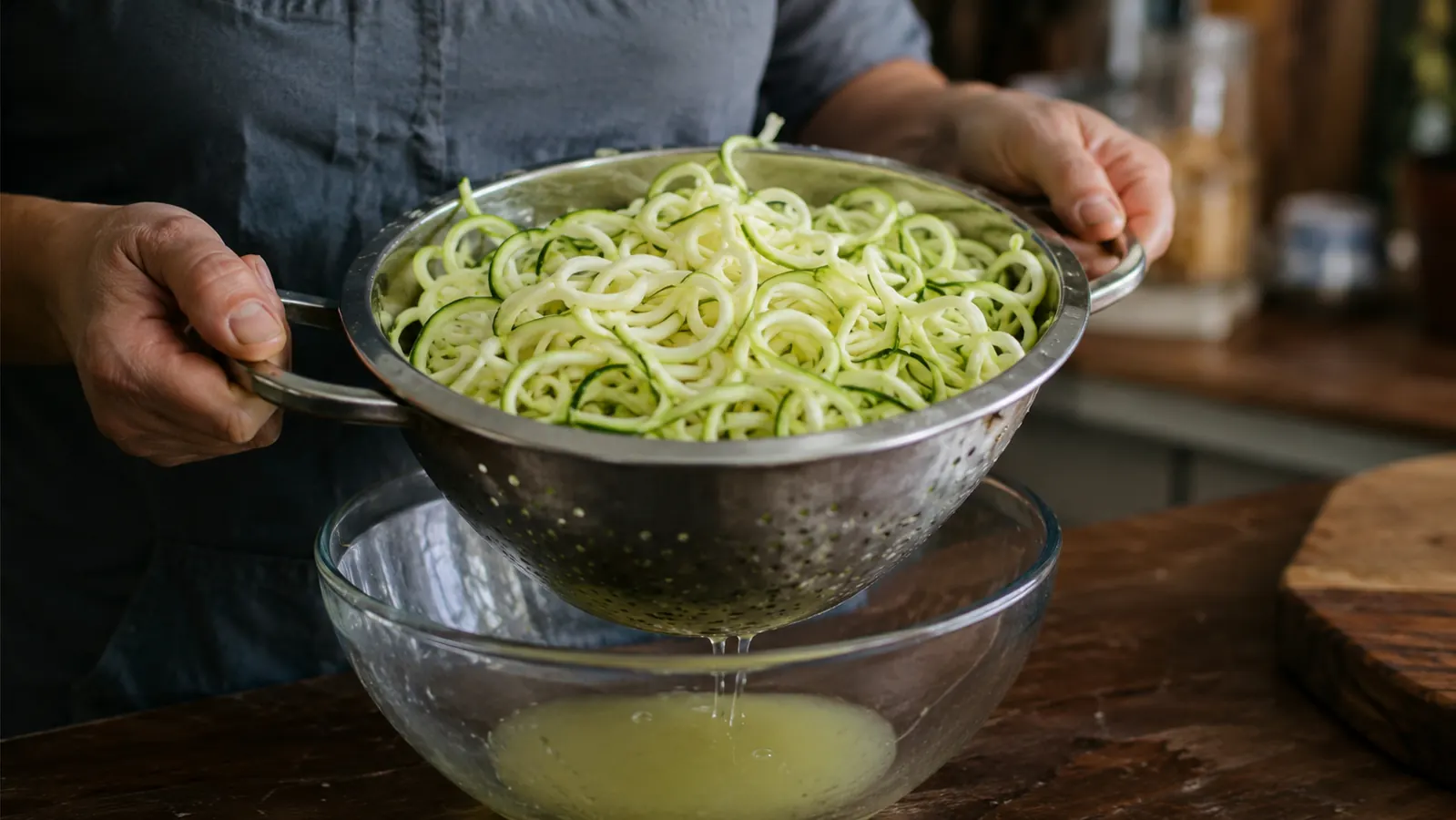
This is the step I skipped for months and paid for every single time. Zucchini is mostly water, and if you dump freshly spiralized noodles straight into a hot pan, that water cooks out right into whatever sauce you're making, thinning it into something closer to soup. I spread the noodles into a colander set over a bowl, sprinkle them with about a teaspoon of salt, and toss lightly with my hands so the salt touches most of the strands, then I leave it alone for ten to fifteen minutes.
The salt pulls water out of the zucchini cells through osmosis, and you can actually watch a small pool collect in the bowl underneath by the end of that wait. After the fifteen minutes, I lay the noodles out on a clean kitchen towel or a few layers of paper towel and press down gently, rolling them a bit like I would with fresh pasta dough, to squeeze out whatever water the salt didn't already pull loose. Skipping this step is the single most common reason zucchini noodles taste watered down and bland.
I know it feels like an extra fifteen minutes I don't have on a weeknight, but I usually use that window to get the rest of dinner going, browning garlic or getting a protein started, so it isn't dead time. The salt draw works whether you're making four cups or a double batch for leftovers, and it's the difference between noodles that taste like a vegetable standing in for pasta and noodles that just taste like wet vegetable.
Step 5: Cook Them Fast and Keep Them Separate From the Sauce
Zucchini noodles cook in about ninety seconds to two minutes in a hot skillet with a little oil, tossed constantly, and that's it. I know it feels wrong compared to boiling regular pasta for eight or nine minutes, but zucchini keeps cooking from residual heat even after it leaves the pan, so pulling it slightly underdone is the right call. Anything longer than two minutes over medium high heat and the noodles start going translucent and limp, which is the texture that makes people say they don't like zucchini noodles in the first place.
I always cook my sauce completely separately and combine the two only right before serving, off the heat, tossing gently in the pan for maybe ten seconds just to coat. If the noodles sit in a simmering sauce for even a few extra minutes, they release more water and dilute everything around them. Plating immediately matters too. A bowl of zucchini noodles left sitting for ten minutes on the counter while you finish setting the table will have a small puddle at the bottom by the time you sit down.
A simple garlic and olive oil sauce, a quick marinara, or a light pesto all work better here than anything cream-based, since cream sauces tend to separate against the little bit of water zucchini noodles still release even after draining. Leftovers are honestly the one place this vegetable falls short compared to regular pasta. I don't recommend saving cooked zucchini noodles overnight, since they turn watery and limp in the fridge no matter how well they were drained the first time. If I want extra for tomorrow, I spiralize and salt a bigger batch but only cook what we're eating that night.
What Else Helps
A few small habits made this whole routine stick beyond the five steps above. I run cucumbers and carrots through the same Brieftons blade for cold noodle salads in the summer, so the machine earns its drawer space on more than just zucchini nights. The unit itself breaks down into four pieces that all go on the top rack of my dishwasher, which mattered to me more than I expected, because a spiralizer that requires hand-scrubbing five little blade slots after every use is one that quietly stops getting used.
I also keep a second, smaller container in the fridge just for the discard cores and odd end pieces, so nothing goes straight in the trash before I've had a chance to use it in stock. And if I know I'm serving a crowd, I'll spiralize the zucchini a few hours ahead and let it sit salted in the colander the whole time, since the longer draw only pulls out more water, never less. The process scales up without any extra steps, which is really the whole point of a tool like this.
Raw spiralized noodles freeze poorly, since the ice crystals break down the cell walls even more than cooking does, so I don't bother stocking a freezer bag of them the way I would with chopped onions. What does work is prepping the whole vegetable ahead, meaning I'll wash and trim the ends the night before, then run the Brieftons the next afternoon when I'm actually ready to cook. That single step, trimming ahead, shaves a couple minutes off a routine that's already fast, and it means the only thing left on a busy night is turning the crank.
I'm not spiralizing zucchini to prove a point about vegetables. I'm doing it so dinner doesn't end up in a puddle, and that's the only test that actually matters.
Ready to stop fighting a peeler for noodles that fall apart?
Check today's price on the Brieftons 5-Blade Vegetable Spiralizer and see if it's in stock before your next zucchini haul.
Amazon Check Today's Price on Amazon →